


Croatia Cruises
Croatia cruises explore stunning Adriatic coastlines, medieval towns and crystal-clear waters along Europe’s most scenic shores.
Cruise Offers for Croatia

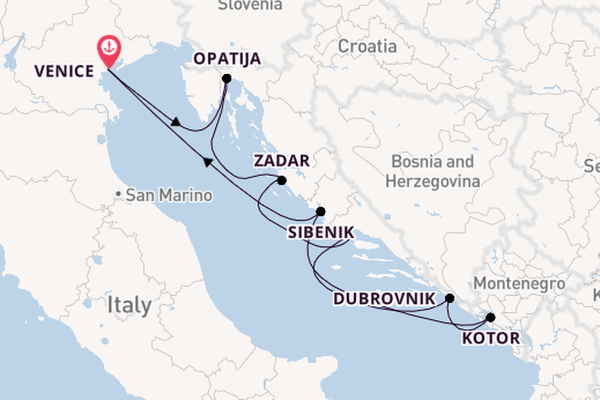
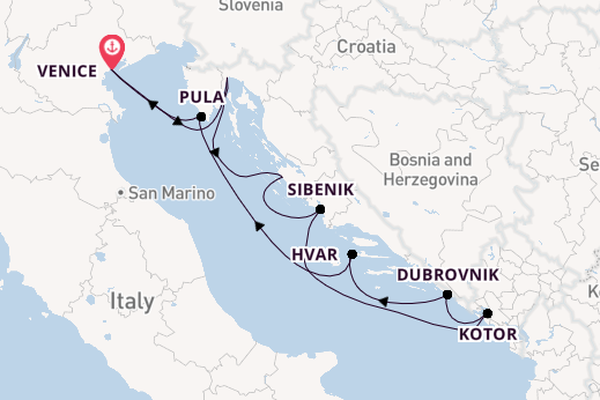
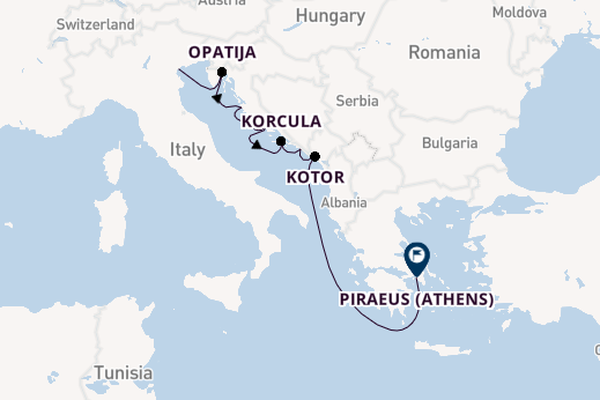
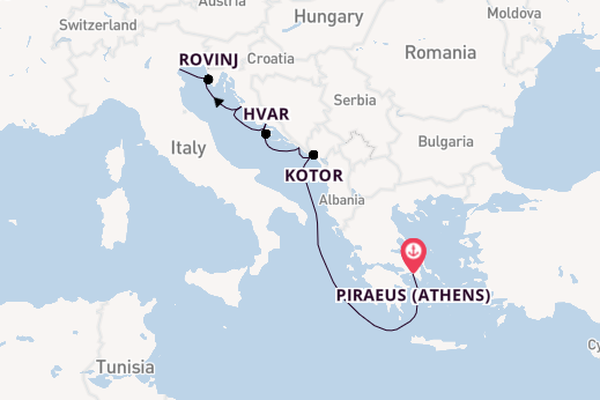

Harbours for Croatia
Travel Tips for Croatia
Cruise Along Croatia’s Adriatic Coast
Croatia is made for cruising. One morning you’re stepping through Dubrovnik’s Pile Gate into a medieval old town of limestone streets and terracotta roofs; the next you’re in Split, having a coffee inside Diocletian’s Palace as the city hums around Roman stonework. A Croatia cruise from the UK is a brilliant way to hop between islands, harbours and historic towns without the hassle of checking in and out of hotels. Think sea views on the way to Hvar, sunset strolls along Zadar’s waterfront, and swim stops in water so clear you can see the seabed from the tender.
Top Harbours in Croatia
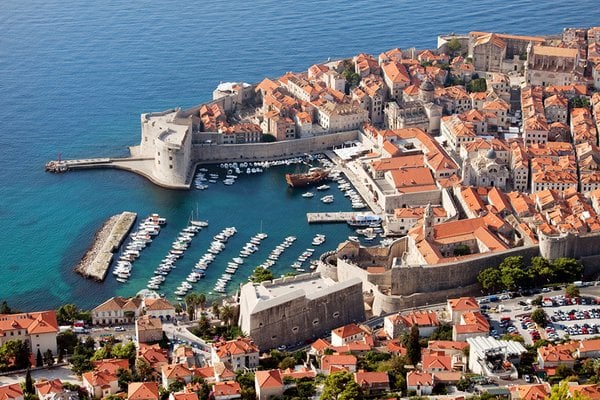
- Dubrovnik, Croatia – Walk the City Walls for views over Fort Lovrijenac and the terracotta rooftops, then take the cable car to Mount Srđ for a panoramic photo that’s worth every step. For a quieter moment, stroll to the Jesuit Steps and the baroque St Ignatius Church.
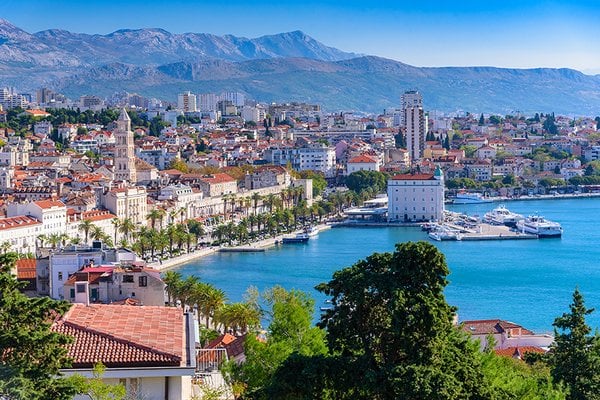
- Split, Croatia – Explore Diocletian’s Palace properly: Peristyle Square, the Cathedral of St Domnius bell tower, and the underground cellars. Finish with a promenade walk along the Riva and a gelato by the palm-lined waterfront.
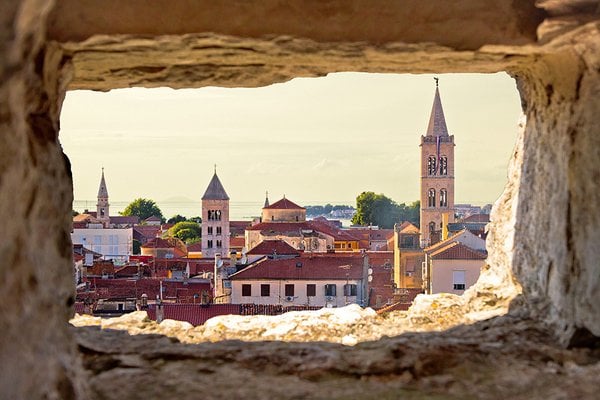
- Zadar, Croatia – Time your visit for late afternoon: listen to the Sea Organ, then watch the light show at Greeting to the Sun as the sky turns pink. Don’t miss the Roman Forum and St Donatus Church nearby.
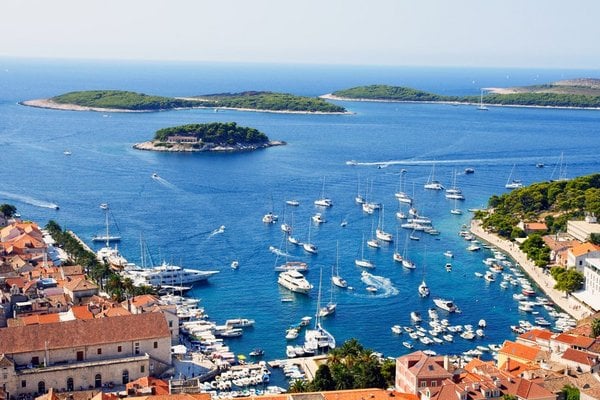
- Hvar, Croatia – A classic island day: climb up to Fortica (Španjola Fortress) for views across the Pakleni Islands, then wander St Stephen’s Square and the waterfront cafés before a swim stop at Dubovica Beach.
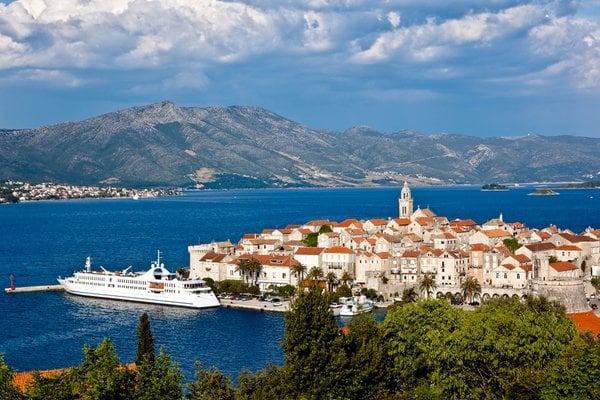
- Korčula, Croatia – Explore Korčula Old Town’s “fishbone” streets, visit St Mark’s Cathedral, and stop for a local white wine tasting (look for Pošip). If you like folklore, ask about a Moreška sword dance performance when it’s running.
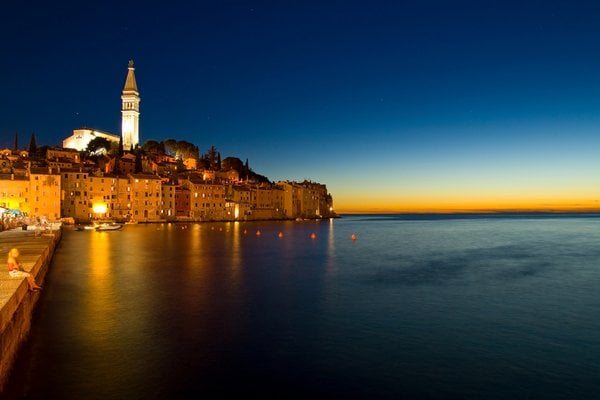
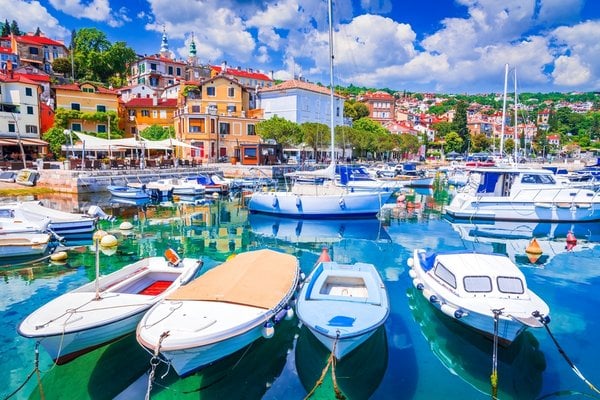
- Rovinj, Croatia – Picture-postcard Istria: climb to the Church of St Euphemia, then browse art galleries on Grisia Street and finish with seafood on the harbourfront.
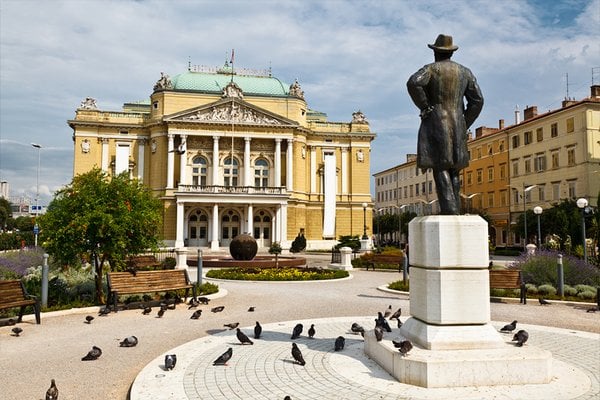
- Rijeka, Croatia – Head up to Trsat Castle for sweeping Kvarner Bay views, then stroll Korzo promenade for cafés and people-watching.
Top Attractions and Activities in Croatia
Dubrovnik City Walls – Walk the full defensive circuit overlooking the Adriatic.
Plitvice Lakes National Park – Follow wooden boardwalks past cascading turquoise lakes.
Diocletian’s Palace, Split – Explore Roman ruins integrated into the old town.
Hvar Town & Fortica Fortress – Climb for harbour views over the Pakleni Islands.
Krka National Park – See Skradinski Buk waterfall and riverside monasteries.
Rovinj Old Town – Wander cobbled lanes to St Euphemia’s Church.
Croatia combines cinematic coastal cities, Roman heritage and stunning national parks.
Customs & Culture in Croatia
Café Culture in Dubrovnik and Split – Locals linger over espresso on waterfront promenades, making coffee more of a social ritual than a quick drink.
Seafood Dining in Dalmatia – Cruise guests should try black risotto (crni rižot) and grilled Adriatic squid in harbour-side konobas.
Historic Pride in Dubrovnik – The city’s walls and Old Town are treated with deep respect; visitors are expected to avoid loud behaviour in narrow streets.
Local Wine Traditions in Croatia – Look for Plavac Mali reds and Pošip whites, especially on island excursions.
Seasonal Expectations & Weather
Spring (April to June) – 18–26°C along the Dalmatian Coast. Easter and local saint festivals affect port activity.
Summer (July to August) – 28–34°C, dry and sunny. Dubrovnik Summer Festival (July–August) increases visitor numbers.
Autumn (September to October) – 20–27°C with warm seas and grape harvest festivals.
Winter (November to March) – 8–15°C; quieter and wetter, with bora winds occasionally affecting sea conditions.
Alternative Regions to Consider
Greek Islands – If you love Croatia for clear water and medieval towns, the Greek Islands offer a brighter, more sun-soaked version: Santorini’s caldera views, Rhodes’ fortified old town, and smaller islands where beach clubs and harbourside tavernas are the main attraction.
Italy’s Adriatic Coast – For a nearby alternative with a different culinary angle, consider sailings calling at Venice or Trieste with excursions inland. You’ll get canal-side scenery, elegant squares and easy access to wine regions and historic cities.
Montenegro – If Dubrovnik-style drama is what you’re after, Montenegro’s Bay of Kotor is a standout: sail into the fjord-like bay, explore Kotor’s old town, and climb to the fortress for panoramic views.
Southern France & Corsica – For a Mediterranean alternative with glamour and rugged coastlines, Corsica and the Côte d’Azur combine chic harbour towns with mountain scenery. It’s ideal if you want a more “Riviera” take on the same summer cruising mood.
Top Croatia Cruise Options & Alternatives
UK Departures
- Croatia Cruises from the UK – Ideal for comparing itineraries designed around UK travellers.
- Croatia Cruises from Southampton – A convenient no-fly way to reach Croatia as part of a wider sailing.
- Croatia 2026 Cruises from Southampton – Future sailings with strong cabin choice and route variety.
- Croatia 2027 Cruises from Southampton – Another forward-planning option with popular summer dates.
Plan by Year
- Croatia Cruises 2026 – A clear overview of next-season itineraries.
- Croatia Cruises 2027 – Perfect for early bookers who want the best cabin selection.
All Inclusive Options
- Croatia Cruises All Inclusive – A simple way to keep onboard costs predictable.
- Croatia Cruises 2026 All Inclusive – Plan ahead with bundled value.
- Croatia Cruises 2027 All Inclusive – Future sailings with an all-inclusive approach.
By Cruise Line
- Princess Croatia Cruises – Great for a balanced mix of sea days and Croatian ports.
Ports & Places
- Opatija, Croatia – Belle Époque architecture and the seaside Lungomare promenade.
- Vodice, Croatia – A relaxed coastal stop with beach time and waterfront dining.
Alternative Regions
If you love the idea of cruises around Croatia but want to compare similar coastal styles, these regions are natural next picks:
- Mediterranean – Classic sunshine cruising with a huge range of itineraries and port styles.
- Europe Cruises – Handy for comparing Adriatic-style routes against other European regions.
FAQs About Croatia Cruises
What’s the best port day in Croatia for first-timers?
Dubrovnik and Split are the classics. Dubrovnik’s City Walls and Mount Srđ views are unforgettable, while Split’s Diocletian’s Palace lets you explore Roman history with cafés, shops and markets woven into the site.
Are cruises through Croatia good for island lovers?
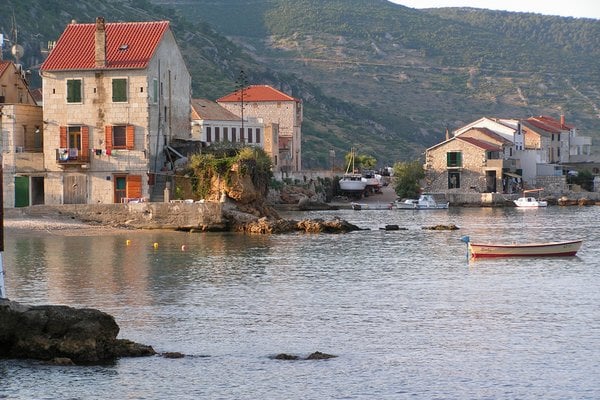
Yes. Itineraries often include island ports like Hvar and Korčula, where you can mix viewpoints, beaches, and local wine tastings without travelling far from the harbour.
Will I need lots of excursions, or can I explore independently?
Many travellers explore independently in cities like Split and Dubrovnik because the main sights are straightforward. Excursions are worth it for special experiences, such as a private boat to quiet swim coves near Hvar or a guided Istrian food tour from Rovinj.
When is the best time for Croatia cruise holidays?
May, June and September are excellent for comfortable temperatures and a slightly calmer feel in port. July and August are hottest and busiest, ideal if you want peak summer energy and long evenings by the water.
Which Croatian ports are most popular on cruises?
Dubrovnik and Split are the most common, with Zadar and Hvar appearing on smaller-ship itineraries.
Is Dubrovnik too crowded in summer?
It can be — July and August are extremely busy, especially when multiple ships dock the same day.
Can you walk from the cruise port to Dubrovnik Old Town?
From Gruž port it’s around 10–15 minutes by taxi or bus, not a comfortable walk in heat.
What’s the best excursion in Dubrovnik?
Walking the city walls is the top choice, followed by a cable car ride to Mount Srđ.
Do Croatia cruises include Game of Thrones locations?
Yes — Dubrovnik is famous for filming sites, and themed tours are widely available.
Tempted by the crystal-clear waters of Croatia? Call our Cruise Specialists and let us help you find your perfect Croatia cruise.
Expert Tip
On Croatia cruises, we recommend exploring ports like Dubrovnik and Split either early morning or late afternoon, when day-trippers have left and the old towns are far quieter. We also suggest venturing just beyond the historic centres, where local konobas offer better-value seafood and a more authentic experience than waterfront restaurants.
 +44
+44