


Norwegian Fjord Cruises
Norwegian Fjords cruises reveal dramatic landscapes, cascading waterfalls and breathtaking scenery from unforgettable northern sailings.
Our Best Norwegian Fjords Deals
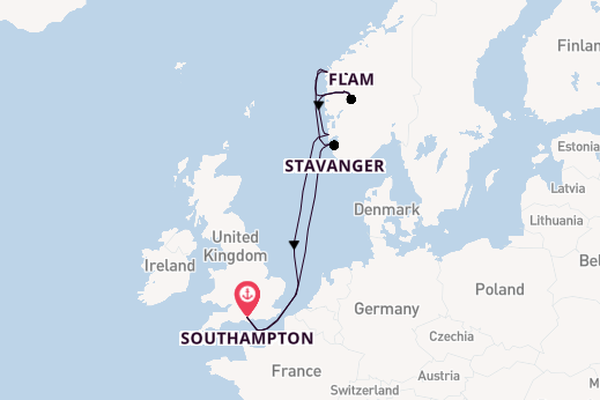
Norway from Southampton, England with the Iona
- P&O's LNG-powered flagship launched 2020 — the largest ship sailing year-round from Southampton, for up to 5,200 guests
- The SkyDome — a 970 m² retractable glass dome above a swimming pool — is Iona's unmissable signature venue
- Eighteen venues including Anderson's gin bar, Sindhu, The Epicurean, and The Chef's Table — built for British tastes
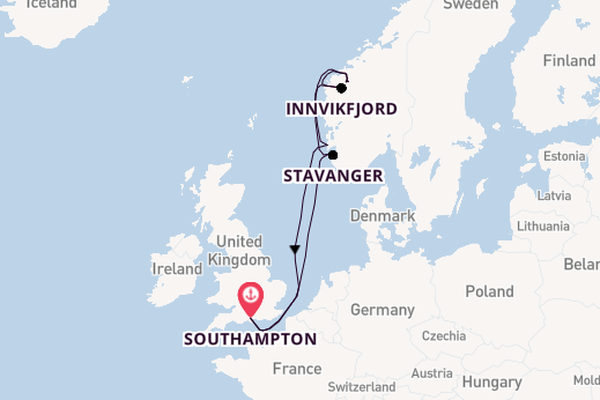
Norway from Southampton, England with the Iona
- P&O's LNG-powered flagship launched 2020 — the largest ship sailing year-round from Southampton, for up to 5,200 guests
- The SkyDome — a 970 m² retractable glass dome above a swimming pool — is Iona's unmissable signature venue
- Eighteen venues including Anderson's gin bar, Sindhu, The Epicurean, and The Chef's Table — built for British tastes
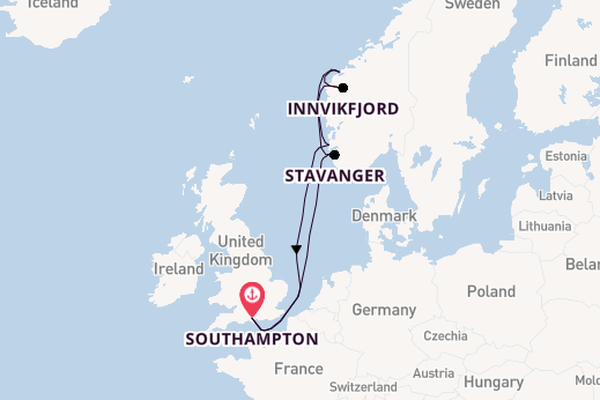
No Fly Norwegian Fjords
- P&O's LNG-powered flagship launched 2020 — the largest ship sailing year-round from Southampton, for up to 5,200 guests
- The SkyDome — a 970 m² retractable glass dome above a swimming pool — is Iona's unmissable signature venue
- Eighteen venues including Anderson's gin bar, Sindhu, The Epicurean, and The Chef's Table — built for British tastes
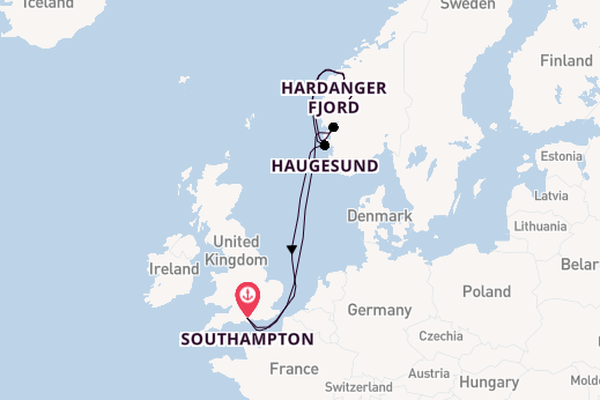
Norway from Southampton, England with the Arvia
- Launched 2022 — P&O's newest ship, the largest ever built for the British market, christened by Nicole Scherzinger
- The SkyDome fuses a retractable performance stage with a swimming pool under 970 m² of glass — a venue found nowhere else at sea
- Sindhu, The Epicurean, The Glass House, and the Keel & Cow gastropub among 30+ dining and bar venues
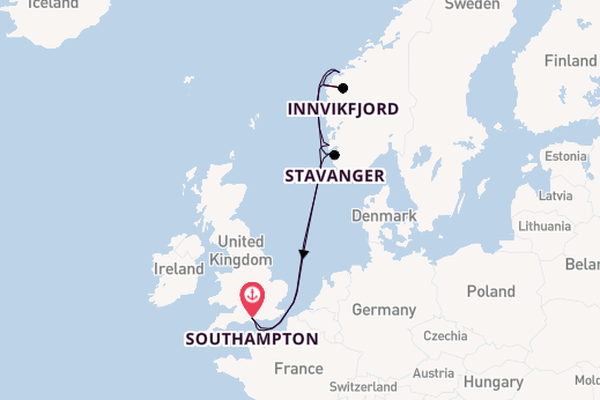
No Fly Norwegian Fjords
- Launched 2022 — P&O's newest ship, the largest ever built for the British market, christened by Nicole Scherzinger
- The SkyDome fuses a retractable performance stage with a swimming pool under 970 m² of glass — a venue found nowhere else at sea
- Sindhu, The Epicurean, The Glass House, and the Keel & Cow gastropub among 30+ dining and bar venues
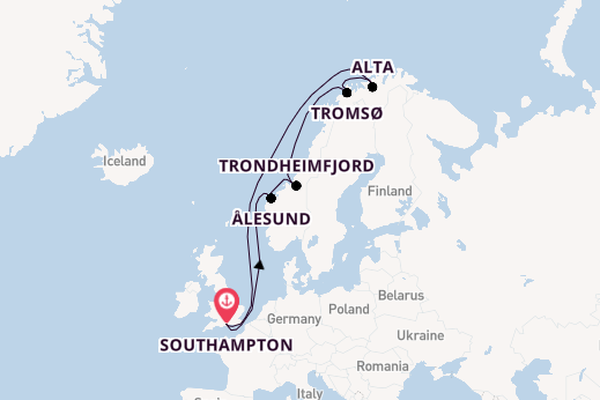
Luxury No Fly Search for the Northern Lights
- Refurbished 2025, sailing from Southampton — Majestic Princess has the SeaWalk glass-floor walkway cantilevered over the ocean
- Hollywood Pool Club's glass-domed pool, Crown Grill, Sabatini's, O'Malley's Irish Pub, and Chef's Table Lumiere across 16 venues
- MedallionClass delivers food and drinks anywhere on board; The Sanctuary offers an adults-only top-deck retreat

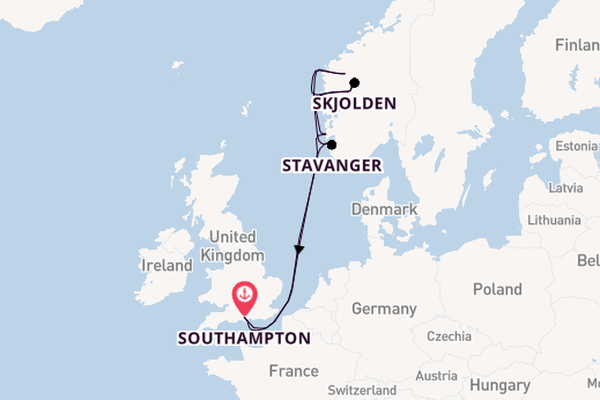
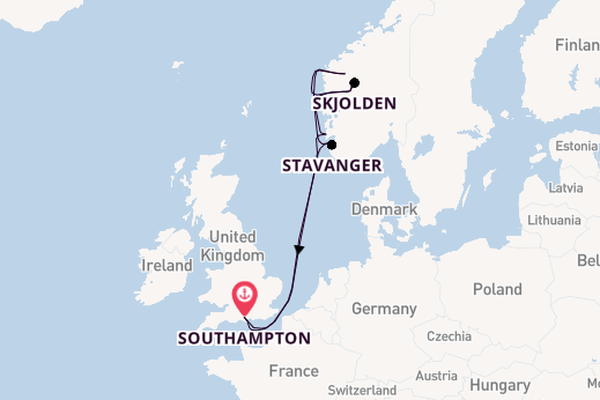
Norway from Southampton, England with the Freedom of the Seas
- 3D cinema and open-air cinema screen
- Ice skating rink onboard
- Exotic drinks served at "Tropics" bar
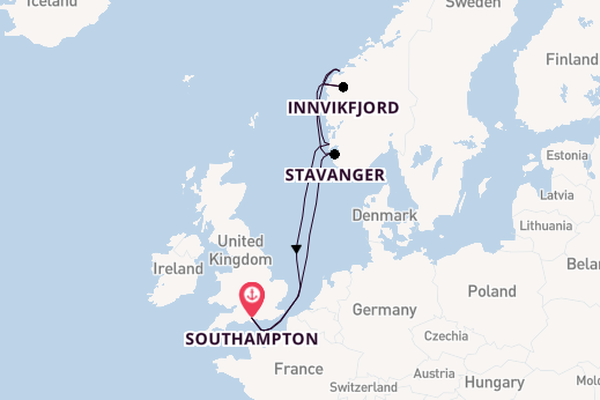
No Fly Norwegian Discovery
- Galleria Meraviglia's 96-metre LED sky promenade is the ship's beating heart — boutiques, restaurants, nightly entertainment
- Rock Circus and House of Houdini — exclusive Carousel Productions shows — are performed only on Meraviglia and Bellissima
- Polar Aquapark, full-sized bowling alley, Formula 1 simulators, and MSC Yacht Club cater for every age and mood
Norway from Southampton, England with the Iona
- P&O's LNG-powered flagship launched 2020 — the largest ship sailing year-round from Southampton, for up to 5,200 guests
- The SkyDome — a 970 m² retractable glass dome above a swimming pool — is Iona's unmissable signature venue
- Eighteen venues including Anderson's gin bar, Sindhu, The Epicurean, and The Chef's Table — built for British tastes
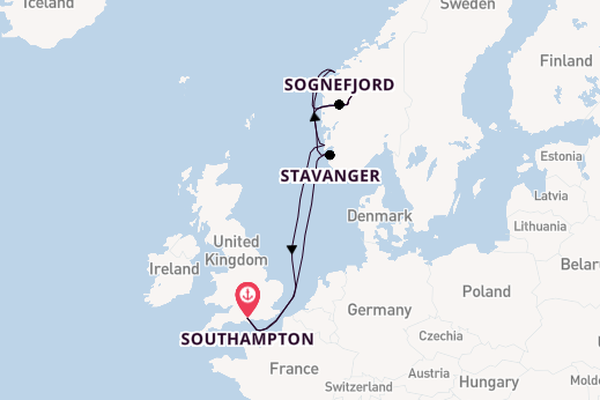
Norway from Southampton, England with the Arvia
- Launched 2022 — P&O's newest ship, the largest ever built for the British market, christened by Nicole Scherzinger
- The SkyDome fuses a retractable performance stage with a swimming pool under 970 m² of glass — a venue found nowhere else at sea
- Sindhu, The Epicurean, The Glass House, and the Keel & Cow gastropub among 30+ dining and bar venues
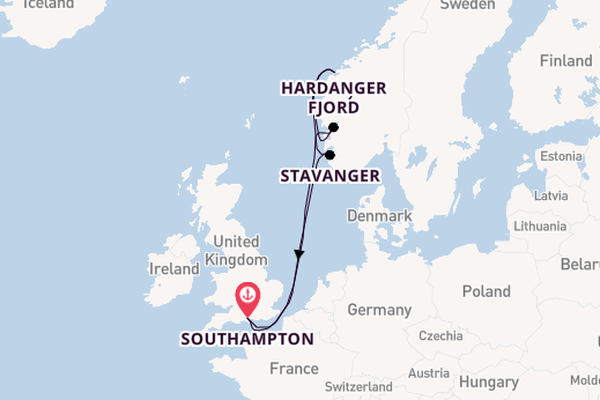
Norway from Southampton, England with the Arvia
- Launched 2022 — P&O's newest ship, the largest ever built for the British market, christened by Nicole Scherzinger
- The SkyDome fuses a retractable performance stage with a swimming pool under 970 m² of glass — a venue found nowhere else at sea
- Sindhu, The Epicurean, The Glass House, and the Keel & Cow gastropub among 30+ dining and bar venues
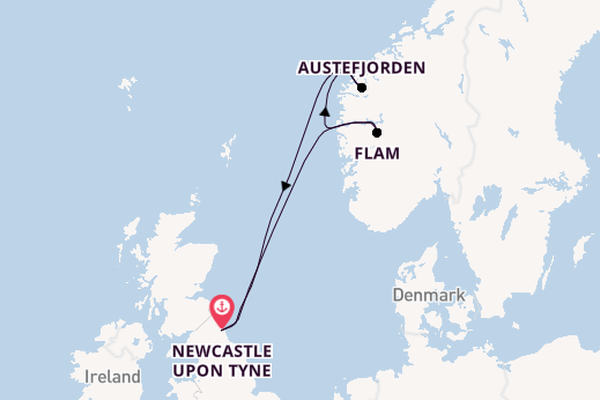
6 day cruise with the Ambition to Newcastle upon Tyne
- No-fly cruising from UK ports means your holiday starts without airport queues, just smooth sailing from the moment you arrive
- It feels like home, but with way better views: enjoy a proper British cruise with entertainment that feels familiar and fun
- Cruising made for grown-ups: relax in an adults-only setting, with the exception of select family sailings during school holidays
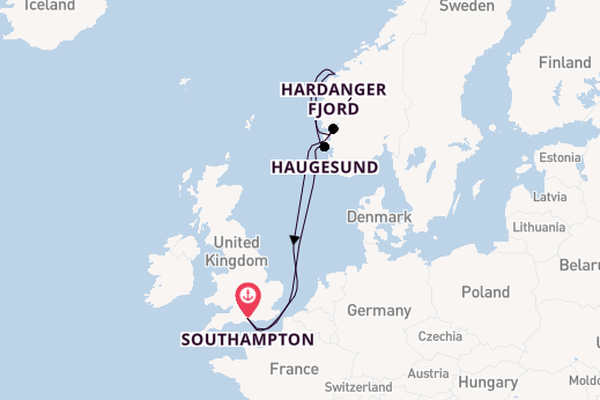
Norway from Southampton, England with the Iona
- P&O's LNG-powered flagship launched 2020 — the largest ship sailing year-round from Southampton, for up to 5,200 guests
- The SkyDome — a 970 m² retractable glass dome above a swimming pool — is Iona's unmissable signature venue
- Eighteen venues including Anderson's gin bar, Sindhu, The Epicurean, and The Chef's Table — built for British tastes
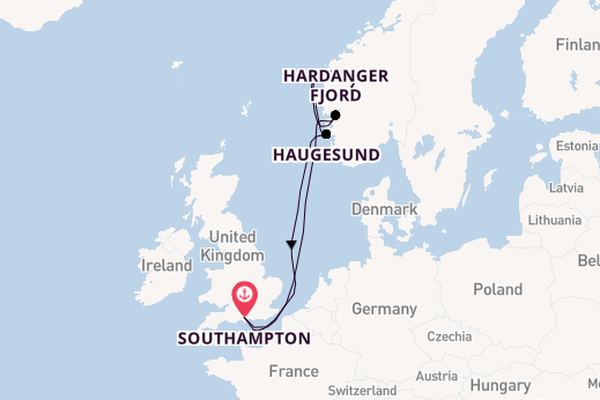
Norway from Southampton, England with the Queen Anne
- Newest Cunard ship (2024): bold interiors by world-renowned designers, crafted to surprise you around every corner
- Experience timeless British tradition with Gala Evenings, Afternoon Tea and Cunard's highly personalized White Star Service
- With 15 restaurants on board, Queen Anne offers more dining variety than any other ship in the fleet

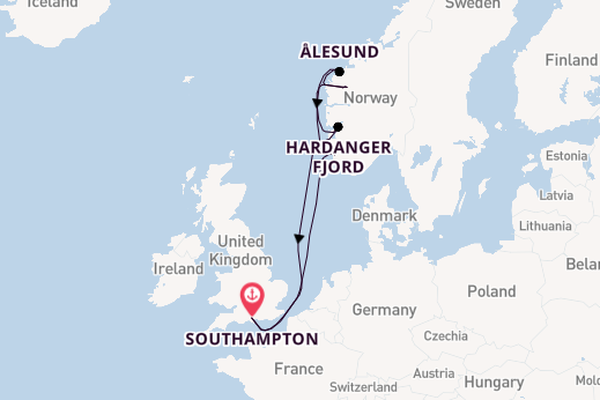
Norway from Southampton, England with the Arvia
- Launched 2022 — P&O's newest ship, the largest ever built for the British market, christened by Nicole Scherzinger
- The SkyDome fuses a retractable performance stage with a swimming pool under 970 m² of glass — a venue found nowhere else at sea
- Sindhu, The Epicurean, The Glass House, and the Keel & Cow gastropub among 30+ dining and bar venues
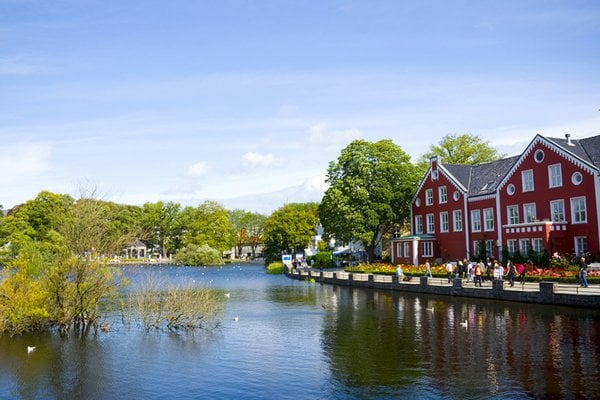
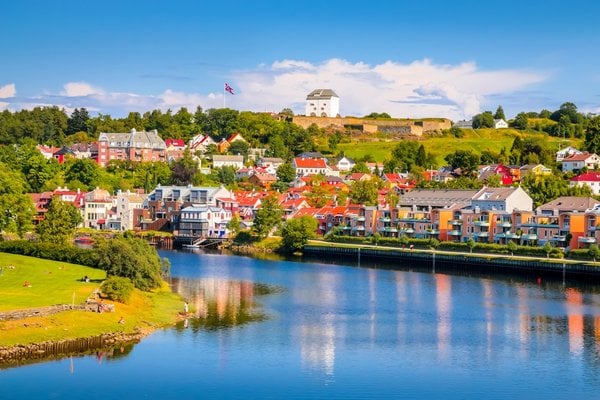
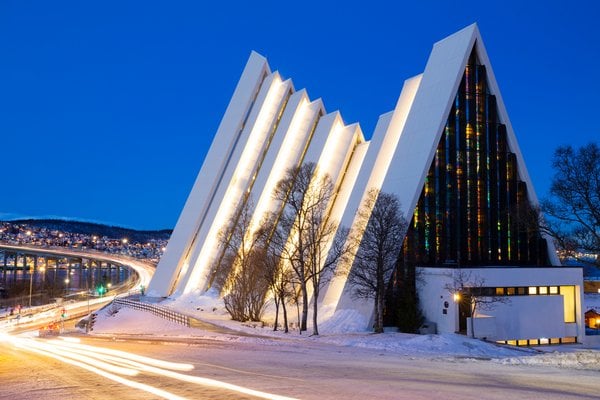
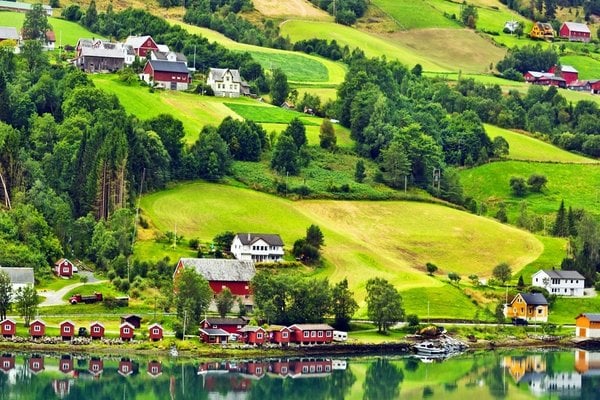
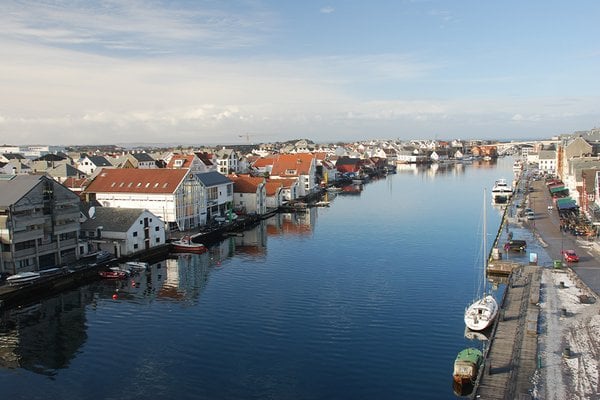
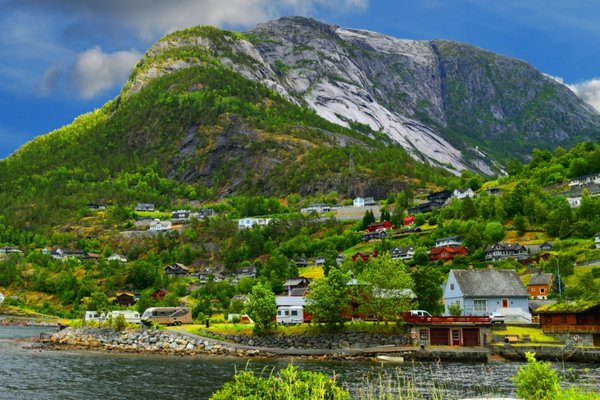
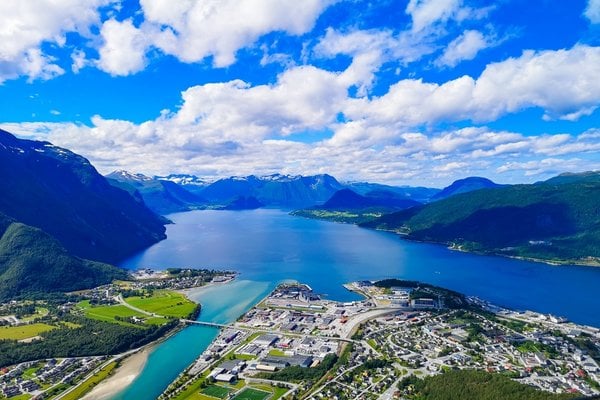
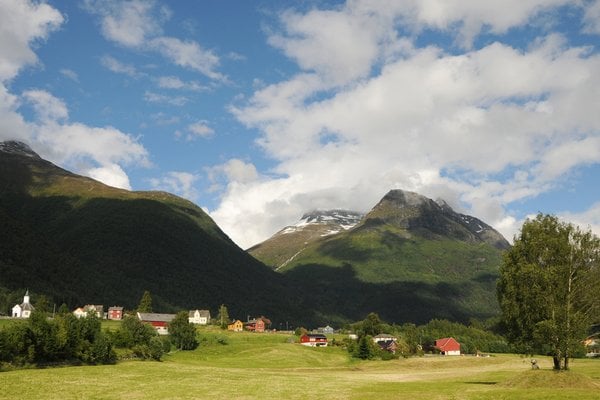
Harbours for Norwegian Fjords
Travel Tips for Norwegian Fjords
Explore Norway’s Majestic Fjords
A journey through the Norwegian Fjords is widely regarded as one of the most scenic cruise experiences in the world. Towering cliffs, snow-capped peaks, cascading waterfalls and mirror-like waters combine to create landscapes that feel untouched and deeply atmospheric. A Norwegian fjords cruise allows you to glide deep into narrow waterways where traditional villages cling to the shoreline and nature takes centre stage.
Top Harbours in Norwegian Fjords
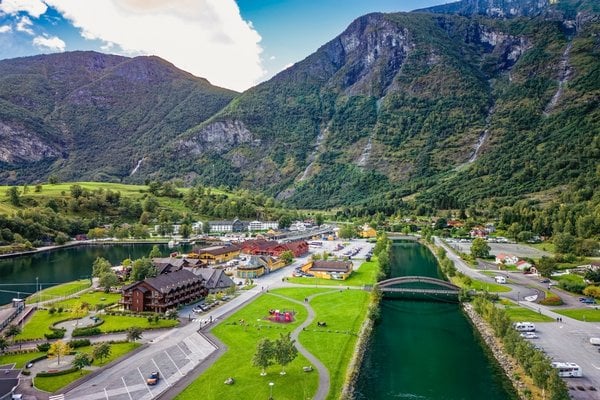
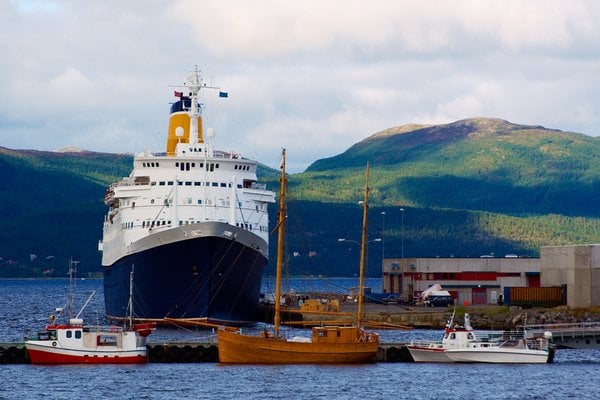
Bergen – A postcard harbour with Bryggen Wharf, the Fløibanen funicular, and easy fjord excursions.
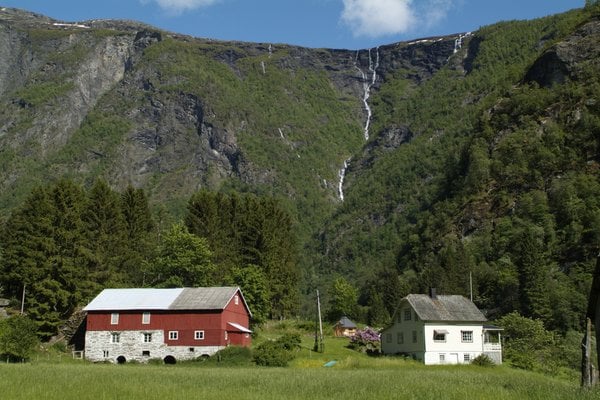
Geiranger – One of Norway’s most dramatic arrivals, surrounded by waterfalls and steep valley scenery.
Flåm – Small but spectacular, with the Flåm Railway and Aurlandsfjord views.
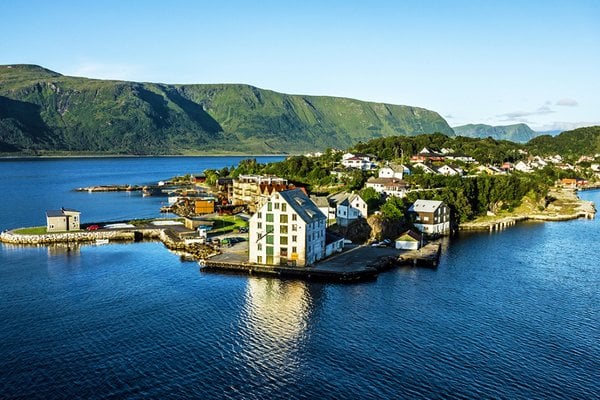
Ålesund – A striking Art Nouveau town with viewpoints over islands and fjords.
Stavanger – A favourite for Lysefjord trips and the famous Preikestolen hike.
Top Attractions and Activities in the Norwegian Fjords
Geirangerfjord & Seven Sisters Waterfall – Sail past towering cliffs and cascading falls, then look for the famous “Suitor” waterfall opposite.
Trollstigen Scenic Road – Drive the hairpin bends to the Trollstigen plateau, stopping at the glass viewing platform over the valley.
Flåm Railway (Flåmsbana) – Ride one of the world’s steepest railways from Flåm to Myrdal, passing Kjosfossen waterfall en route.
Stegastein Viewpoint, Aurlandsfjord – Step onto the dramatic cantilevered platform for panoramic views above Aurland and the fjord.
Briksdal Glacier, Olden – Walk to the glacier tongue (or take the troll car), surrounded by waterfalls and green valley scenery.
Bergen’s Bryggen Wharf – Explore the UNESCO-listed Hanseatic buildings, then take the Fløibanen funicular for views from Mount Fløyen.
The Norwegian Fjords are all about jaw-dropping scenery — with iconic railways, mountain roads and waterfalls that feel like something straight out of a film.
Customs & Culture in Norwegian Fjords
Friluftsliv in Norway – Cruise passengers visiting Geiranger or Flåm will notice locals embracing outdoor life, hiking and kayaking in almost any weather.
Stave Church Heritage in Norway – Excursions to Borgund Stave Church highlight medieval wooden architecture unique to the region.
Coffee Traditions in Bergen – Norwegians rank among the world’s top coffee drinkers; expect strong filter coffee served with waffles and brown cheese.
Respect for Nature in the Fjords – Norway’s “allemannsretten” encourages public access to nature, but visitors must leave landscapes pristine.
Seasonal Expectations & Weather
Spring (April to May) – 6–14°C with crisp air and powerful waterfalls from snowmelt in Geiranger and Flåm. Norway’s Constitution Day (17 May) brings colourful parades and local closures.
Summer (June to August) – 15–22°C in sheltered fjords, cooler at sea. Midnight Sun daylight enhances scenic cruising. July is busiest due to European school holidays.
Autumn (September) – Cooler (8–16°C) with golden landscapes and lighter crowds. Increased rainfall, especially around Bergen.
Sea Notes – Fjords remain calm, but North Sea crossings can feel brisk even in summer.
Alternative Regions to Consider
Norwegian Fjords – If your idea of Norway is scenery-first rather than city breaks, choose fjord-heavy itineraries with ports like Flåm (the Flåm Railway), Geiranger (viewpoints and waterfalls), and Ålesund (Art Nouveau streets and the Aksla lookout). It’s the best option when you want the landscape to be the star.
Iceland & Greenland – For a more remote northern adventure, pair Iceland with Greenland’s vast fjords: Nuuk for museums and harbour walks, and smaller settlements where iceberg-filled bays feel a world away from Europe. It’s a standout choice for travellers who want true expedition-style cruising.
Baltic Sea – If you like Norway’s clean cities, design culture and waterfront feel, the Baltics offer a similar vibe with more capital cities: Stockholm’s archipelago, Helsinki’s architecture, and Tallinn’s medieval lanes. It’s ideal when you want culture-heavy days rather than mountain excursions.
Scottish Highlands – For a nearer alternative that still feels “northern”, cruises to Invergordon offer castle visits, distillery tours, and moody landscapes that scratch a similar Nordic itch. It’s perfect if you want the atmosphere without committing to a full Norway itinerary.
Norwegian Fjords Top Cruise Options
All Inclusive & Cruise Deals
- All Inclusive Norwegian Fjords Cruises – Sail with dining, drinks and onboard extras bundled for complete peace of mind.
- All Inclusive Norwegian Fjords Cruises 2026 – Secure excellent value with inclusive packages on 2026 departures.
- All Inclusive Norwegian Fjords Cruises 2027 – Plan ahead with all-inclusive sailings featuring modern ships and upgraded inclusions.
- Norwegian Fjords Cruise Deals – Find seasonal offers, reduced fares and added-value incentives.
Year-Based Fjord Cruises
- Norwegian Fjords Cruises 2026 – Enjoy expanded sailing schedules and newer ships.
- Norwegian Fjords Cruises 2027 – Book early for the best cabin selection and itineraries.
P&O Iona Fjord Sailings
- Norwegian Fjords Aboard P&O Iona – Experience fjords aboard one of the UK’s most popular ships.
- Norwegian Fjords 2026 Cruises Aboard P&O Iona – Popular itineraries combining scenic sailing with modern onboard facilities.
- Norwegian Fjords 2027 Cruises Aboard P&O Iona – Future sailings with flexible dining and entertainment.
Departure Ports & UK Sailings
- Norwegian Fjords Cruises from Southampton – Convenient no-fly departures for UK travellers.
- Norwegian Fjords Cruises from Southampton 2026 – Ideal for planning ahead with popular summer itineraries.
- Norwegian Fjords Cruises from Newcastle – A great option for travellers in the north of England.
- Norwegian Fjords Cruises from the UK – Explore all available UK departure ports in one place.
Cruise Lines & Ship-Specific Options
- Norwegian Fjords Cruises with P&O Cruises – British-style cruising with familiar comforts.
- Norwegian Fjords 2026 Cruises with P&O Cruises – A strong choice for families and couples alike.
- Norwegian Fjords 2027 Cruises with P&O Cruises – Future itineraries featuring longer scenic days.
- Norwegian Fjords Cruises with MSC Cruises – Contemporary ships with international flair.
- Norwegian Fjords Cruises Aboard Sky Princess – Relaxed elegance paired with excellent viewing areas.
- Princess Norwegian Fjords Cruises – Destination-focused itineraries with refined service.
Fly Cruises & Wider Regions
- Norwegian Fjords Fly Cruises – Combine flights with cruising for greater itinerary variety.
- Norway Cruises – Discover coastal and inland Norwegian itineraries.
- Northern Europe Cruises – Extend your voyage across Scandinavia and the Baltic.
- Arctic Cruises – Venture further north into remote polar regions.
- Northern Light Cruises – Sail during shoulder seasons for aurora sightings.
- Cruise1st Cruise Collection – Browse the full range of cruise holidays available.
FAQs About Norwegian Fjords Cruises
When is the best time to cruise the Norwegian Fjords?
Most sailings operate between May and September when daylight is longest and conditions are mild. Early summer brings waterfalls at full force, while late summer offers calmer weather and fewer crowds.
Is a fjords cruise suitable for first-time cruisers?
Yes. Calm waters, short sailing distances and scenic daytime cruising make fjord itineraries an excellent introduction to cruising.
What should I pack for a Norwegian fjords cruise?
Layered clothing is essential. Even in summer, temperatures can change quickly, so waterproof jackets, comfortable walking shoes and warm layers are recommended.
Which fjords are most commonly visited on cruises?
Geirangerfjord, Sognefjord, Hardangerfjord and Nordfjord are the most frequently featured on itineraries.
What’s the best month for a Norwegian Fjords cruise?
May and June are favourites for waterfalls at full power, while July offers the warmest weather and longest days.
Which fjord ports are the most scenic?
Geiranger, Flåm, Olden and Ålesund are known for dramatic landscapes and iconic photo spots.
Do fjords cruises include the scenic sail-in as part of the day?
Yes — the sail-in and sail-out are often the highlight, especially for Geirangerfjord and Nærøyfjord routes.
What should you pack for a fjords cruise?
Layers, a waterproof jacket, sturdy shoes for viewpoints, and something warm for balcony sailing mornings.
Ready to sail through the spectacular Norwegian Fjords? Call our Cruise Specialists and let us help you find your perfect Norwegian Fjords cruise.
Expert Tips for Cruising the Norwegian Fjords
Norwegian Fjords sailings are most scenic early morning and late evening, so choose balcony cabins on the starboard side when sailing northbound. We recommend packing layers — temperatures can drop rapidly even in summer when ships enter narrow fjords.
 +44
+44