


Baltic Cruises
Baltic cruises visit historic capitals, medieval towns and scenic coastlines across Northern Europe’s cultural heart.
Our Best Baltic Deals
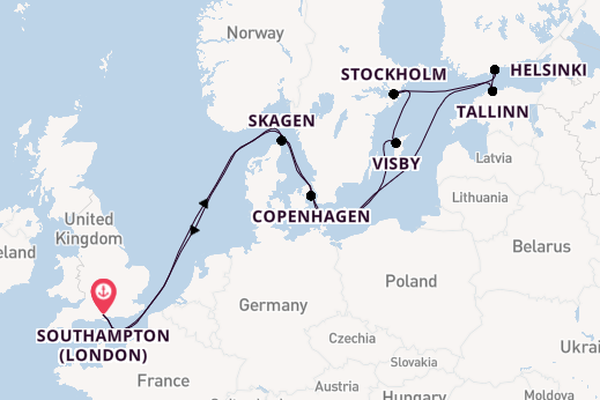
England from Southampton, England with the Celebrity Apex
- The first Forbes Travel Guide four-star-rated resort at sea — a distinction earned by Celebrity Apex and no other cruise ship in the Edge class
- The Magic Carpet cantilevered platform spans 13 floors on the ship's starboard side, serving as a restaurant, sundeck, and live-music bar as it rises and descends
- A 22,000 sq ft spa complex designed by Kelly Hoppen and three-storey Eden venue with Cirque-style performers set Celebrity Apex apart from any standard contemporary ship

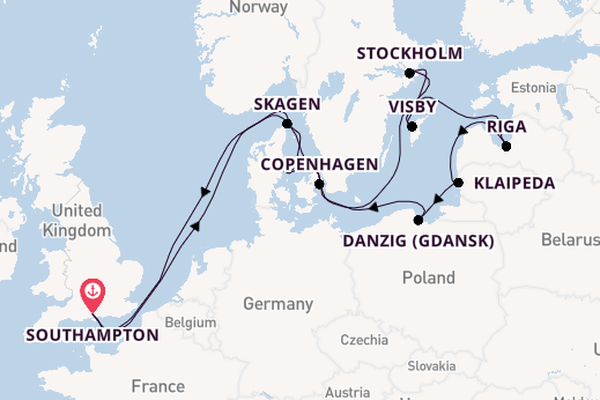
Luxury No Fly Scandinavia & Northern Europe
- The Royal Court Theatre is the first at sea to feature private boxes — host to West End-calibre productions nightly
- The largest ballroom at sea hosts Cunard's famous Gala evenings with a live orchestra and white-gloved afternoon tea service
- Tiered dining across Britannia, Princess Grill and Queen's Grill restaurants — the most traditional class-dining experience afloat

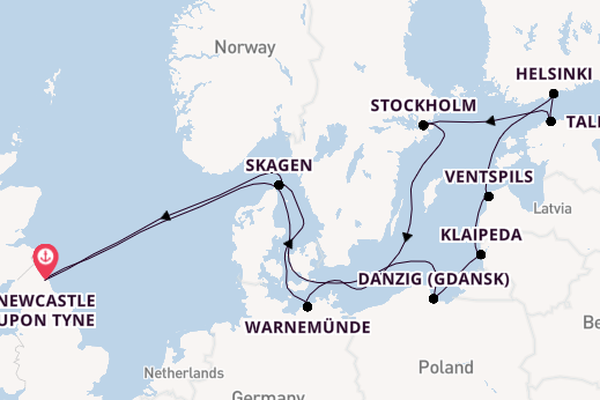
England from Newcastle upon Tyne, England with the Bolette
- Traditional cruising
- A true taste of Britain
- Exemplary onboard service

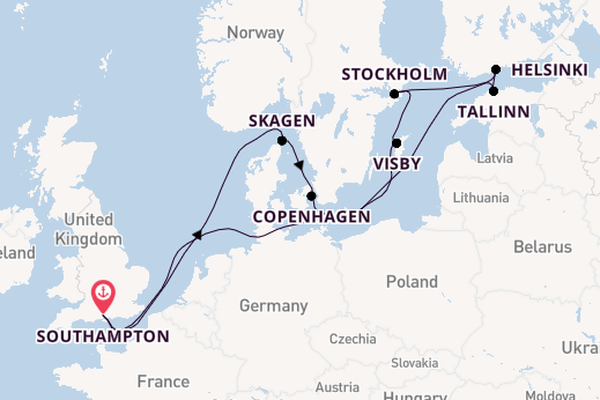
England from Southampton, England with the Celebrity Beyond
- Most spacious Edge Class ship yet
- Heaps of stylish open spaces
- Float pools with boundless views
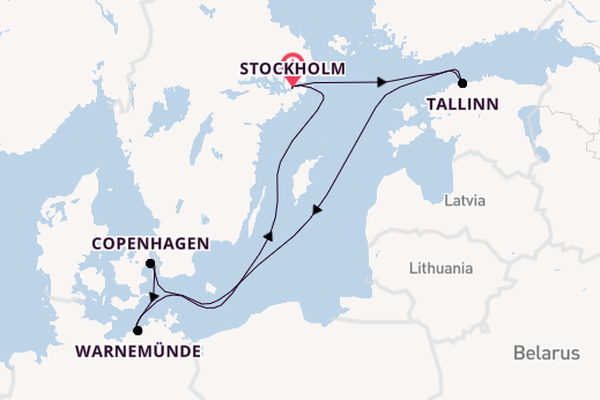
Baltic Sea from Stockholm, Sweden with the MSC Splendida
- The Strand Theatre delivers world-class variety shows nightly, with The Purple Jazz Bar and Club 33 disco among 20 bars and lounges keeping evenings lively
- Five swimming pools and the exclusive Top 18 Solarium offer ample sun-soaked space on this classic 137,936-tonne Fantasia-class ship
- MSC Yacht Club provides a ship-within-a-ship experience with 24-hour butler service, a private pool deck, and exclusive access to the L'Etoile gourmet restaurant

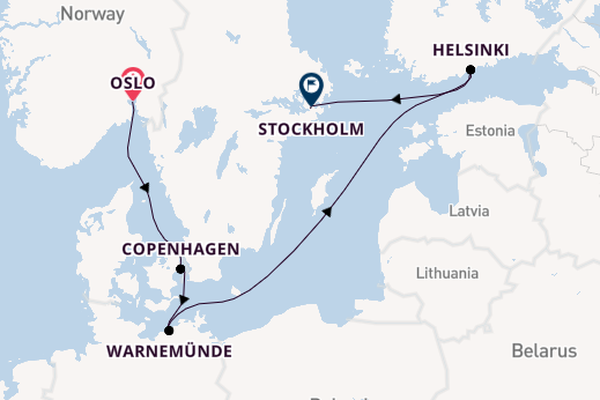
Norway from Oslo, Norway with the MSC Splendida
- The Strand Theatre delivers world-class variety shows nightly, with The Purple Jazz Bar and Club 33 disco among 20 bars and lounges keeping evenings lively
- Five swimming pools and the exclusive Top 18 Solarium offer ample sun-soaked space on this classic 137,936-tonne Fantasia-class ship
- MSC Yacht Club provides a ship-within-a-ship experience with 24-hour butler service, a private pool deck, and exclusive access to the L'Etoile gourmet restaurant
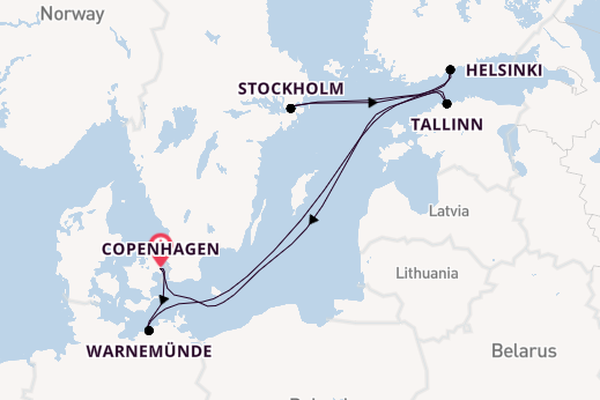
Baltic Sea from Copenhagen, Denmark with the MSC Splendida
- The Strand Theatre delivers world-class variety shows nightly, with The Purple Jazz Bar and Club 33 disco among 20 bars and lounges keeping evenings lively
- Five swimming pools and the exclusive Top 18 Solarium offer ample sun-soaked space on this classic 137,936-tonne Fantasia-class ship
- MSC Yacht Club provides a ship-within-a-ship experience with 24-hour butler service, a private pool deck, and exclusive access to the L'Etoile gourmet restaurant
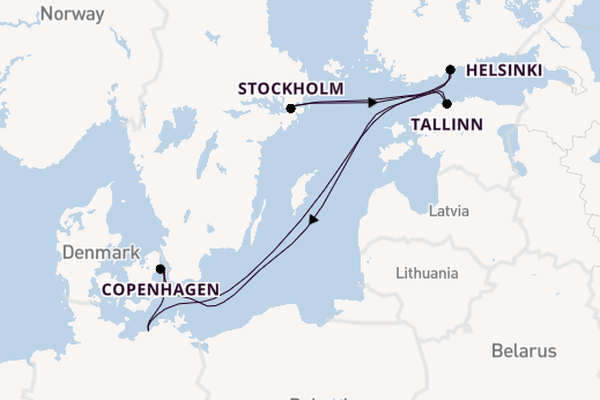
Baltic Sea from Warnemünde, Germany with the MSC Splendida
- The Strand Theatre delivers world-class variety shows nightly, with The Purple Jazz Bar and Club 33 disco among 20 bars and lounges keeping evenings lively
- Five swimming pools and the exclusive Top 18 Solarium offer ample sun-soaked space on this classic 137,936-tonne Fantasia-class ship
- MSC Yacht Club provides a ship-within-a-ship experience with 24-hour butler service, a private pool deck, and exclusive access to the L'Etoile gourmet restaurant
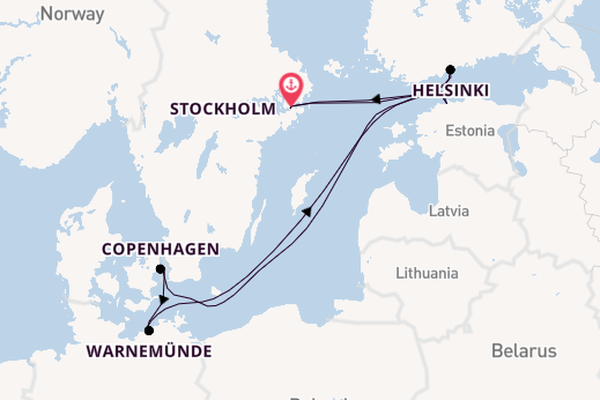
Baltic Sea from Stockholm, Sweden with the MSC Splendida
- The Strand Theatre delivers world-class variety shows nightly, with The Purple Jazz Bar and Club 33 disco among 20 bars and lounges keeping evenings lively
- Five swimming pools and the exclusive Top 18 Solarium offer ample sun-soaked space on this classic 137,936-tonne Fantasia-class ship
- MSC Yacht Club provides a ship-within-a-ship experience with 24-hour butler service, a private pool deck, and exclusive access to the L'Etoile gourmet restaurant
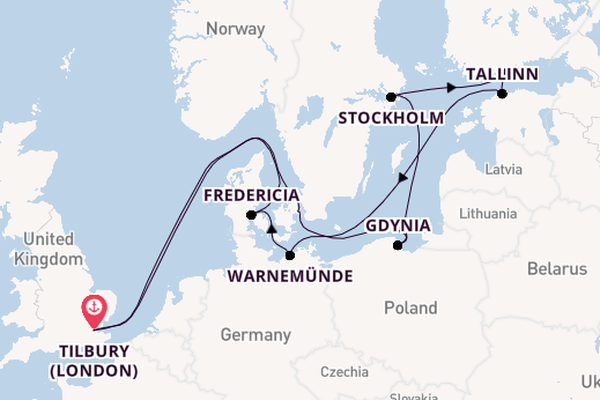
15 day cruise with the Ambience to Tilbury (London)
- Huge New Savings Includes Up To 20% Discount
- No-fly cruising from UK ports means your holiday starts without airport queues, just smooth sailing from the moment you arrive
- It feels like home, but with way better views: enjoy a proper British cruise with entertainment that feels familiar and fun
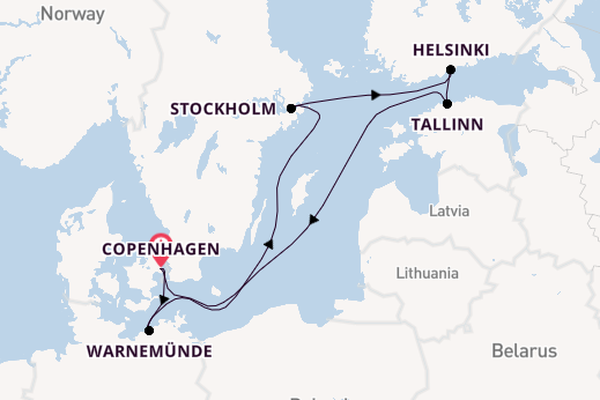
Baltic Sea from Copenhagen, Denmark with the MSC Splendida
- The Strand Theatre delivers world-class variety shows nightly, with The Purple Jazz Bar and Club 33 disco among 20 bars and lounges keeping evenings lively
- Five swimming pools and the exclusive Top 18 Solarium offer ample sun-soaked space on this classic 137,936-tonne Fantasia-class ship
- MSC Yacht Club provides a ship-within-a-ship experience with 24-hour butler service, a private pool deck, and exclusive access to the L'Etoile gourmet restaurant
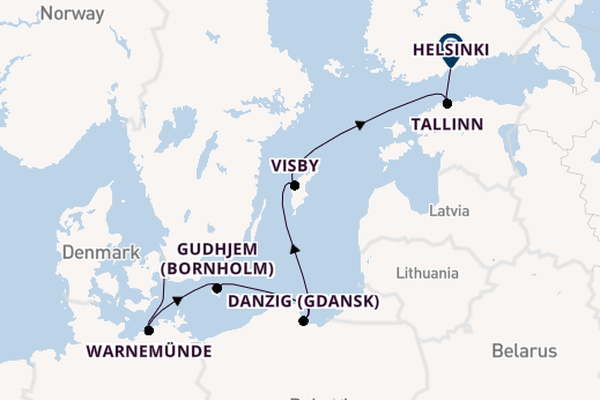
Luxury Baltic Treasure & Helsinki Stay
- Includes 1 night Copenhagen hotel stay
- Includes 2 night Helsinki hotel stay
- Add Drinks, WIFI, Gratuities & More for £50pppd

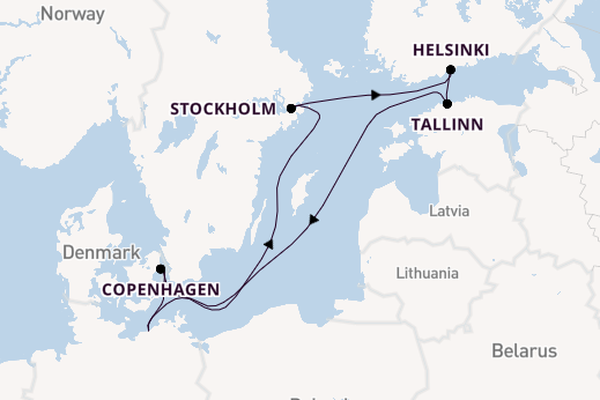
Baltic Sea from Warnemünde, Germany with the MSC Splendida
- The Strand Theatre delivers world-class variety shows nightly, with The Purple Jazz Bar and Club 33 disco among 20 bars and lounges keeping evenings lively
- Five swimming pools and the exclusive Top 18 Solarium offer ample sun-soaked space on this classic 137,936-tonne Fantasia-class ship
- MSC Yacht Club provides a ship-within-a-ship experience with 24-hour butler service, a private pool deck, and exclusive access to the L'Etoile gourmet restaurant
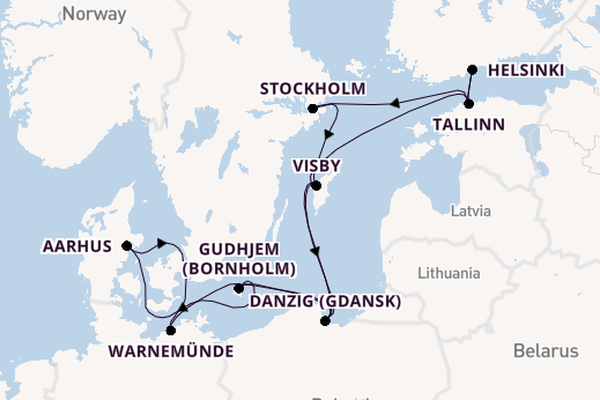
Luxury Baltic Treasures & Copenhagen Stay
- Includes 1 night Copenhagen hotel stay
- Add Drinks, WIFI, Gratuities & More for£50pppd
- Royal-class ship built for 4,250 guests with 19 decks, Princess Theater, Vista Lounge and a multi-level atrium at its heart
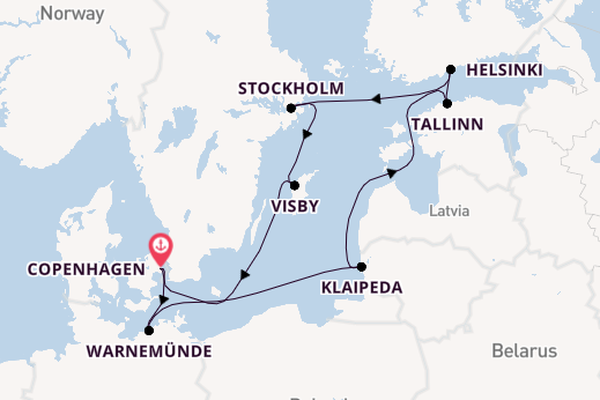
Baltic Sea from Copenhagen, Denmark with the MSC Splendida
- The Strand Theatre delivers world-class variety shows nightly, with The Purple Jazz Bar and Club 33 disco among 20 bars and lounges keeping evenings lively
- Five swimming pools and the exclusive Top 18 Solarium offer ample sun-soaked space on this classic 137,936-tonne Fantasia-class ship
- MSC Yacht Club provides a ship-within-a-ship experience with 24-hour butler service, a private pool deck, and exclusive access to the L'Etoile gourmet restaurant
Harbours for Baltic Sea
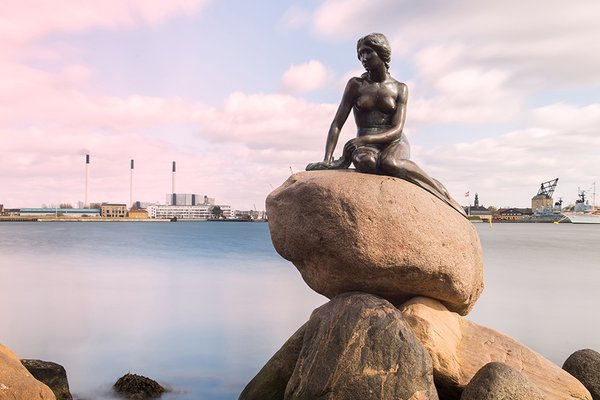
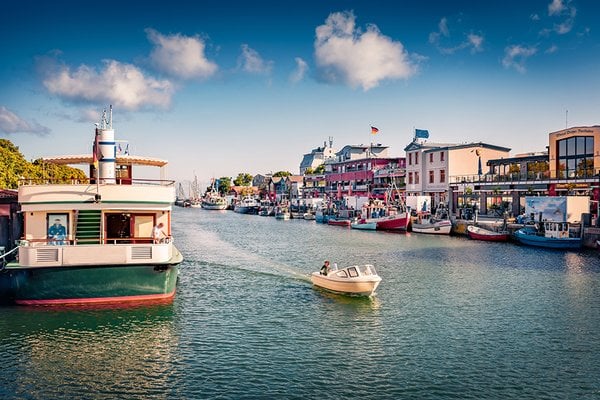
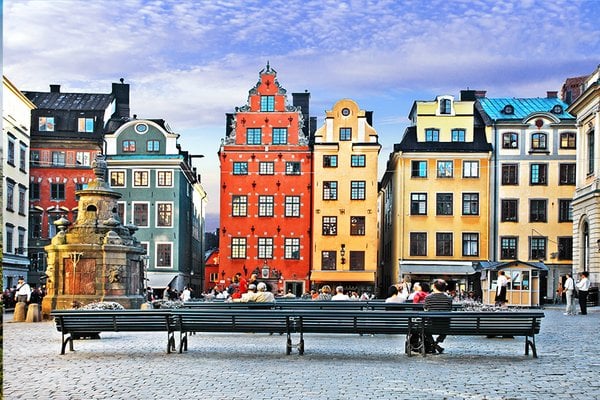
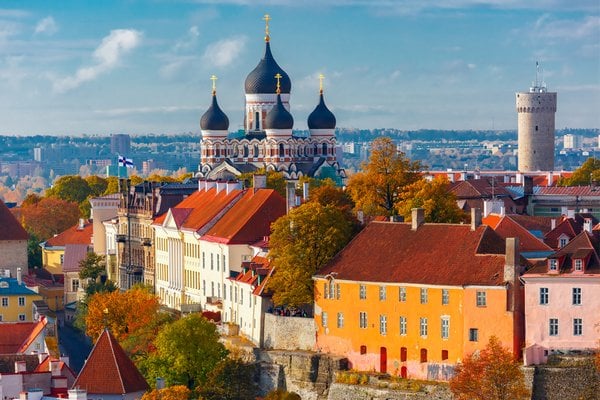
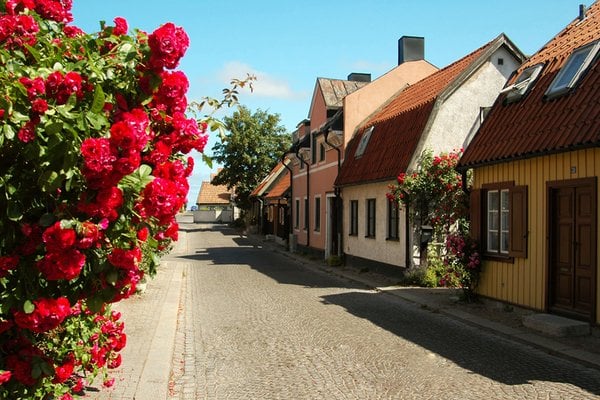
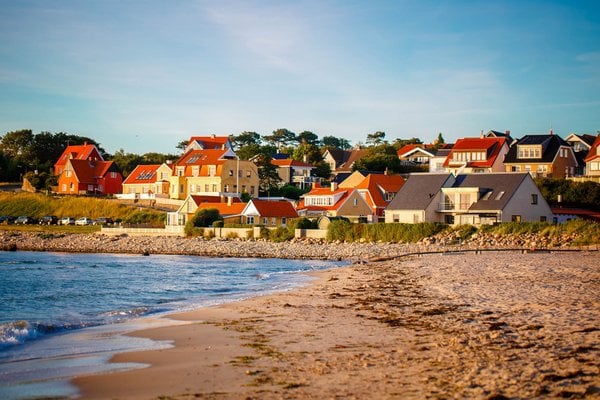
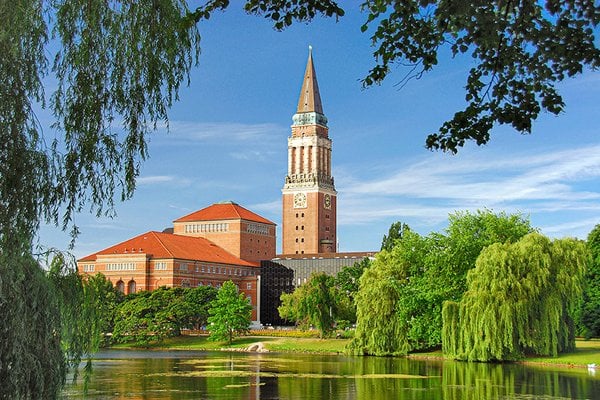
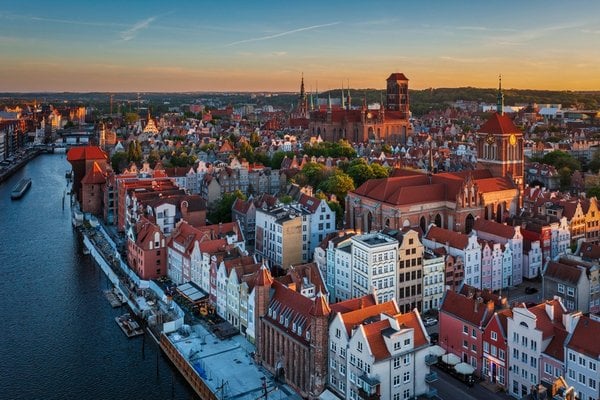
Travel Tips for Baltic
Uncover The Treasures Of The Baltic
A Baltic cruise is the kind of holiday that feels like a grand tour, but without the suitcase shuffle. In a single sailing you can do Copenhagen’s canals, Stockholm’s island cityscape, and Helsinki’s design districts, then finish the day back onboard with dinner already sorted. Baltic sea cruises suit UK travellers who want culture-rich capitals, UNESCO-listed old towns, and scenic sail-ins through archipelagos where the shoreline is dotted with pine forests, painted wooden houses and tiny red boathouses.
Top Harbours in the Baltic
- Copenhagen, Denmark – Start with a canal cruise from Nyhavn, then walk to Amalienborg Palace for the changing of the guard. Finish your day at Tivoli Gardens for old-school rides, food stalls, and evening lights.
- Stockholm, Sweden – Visit the Vasa Museum on Djurgården, then wander Gamla Stan’s cobbled lanes to Stortorget square. If you have time, take the lift at Katarinahissen for sweeping city-and-water views.
- Nynäshamn (Stockholm), Sweden – A smaller gateway port with lovely coastal scenery; many cruisers head straight into Stockholm, but staying local gives you harbour walks and cafés with sea views.
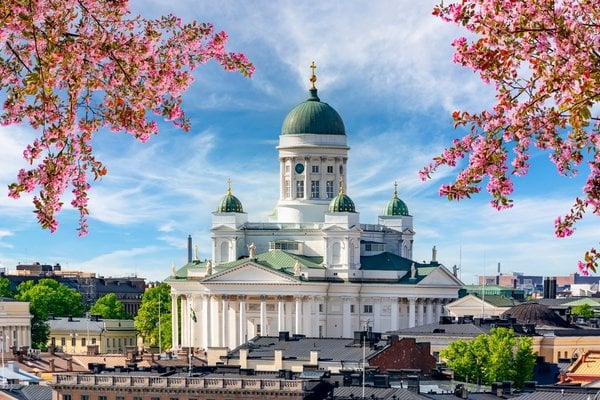
- Helsinki, Finland – Browse the Old Market Hall by the harbour, then see the Helsinki Cathedral at Senate Square. Design lovers should head to the Design District for Marimekko and Iittala browsing.
- Warnemünde, Germany – A classic seaside resort with a wide promenade and lighthouse views. For a bigger city hit, take the train to Rostock to see St Mary’s Church and the historic market square.
- Kiel, Germany – Ideal for a day trip to Hamburg’s Speicherstadt warehouse district and the Elbphilharmonie viewpoint, or keep it local with a stroll along the Kiellinie waterfront.
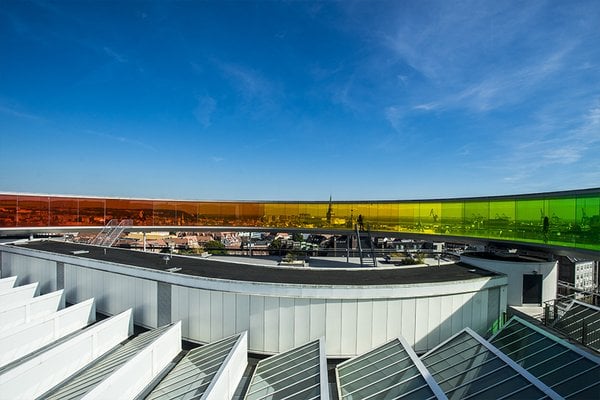
- Aarhus, Denmark – Pop into ARoS Aarhus Art Museum to stand inside the rainbow panorama, then visit Den Gamle By open-air museum for a time-capsule walk through Danish history.
- Visby, Sweden – A standout medieval day: walk the city walls, explore the ruins of St Karin’s Church, and browse artisan shops inside the old town gates.
Top Attractions and Activities in the Baltic
Tallinn Old Town, Estonia – Climb Toompea Hill and visit Alexander Nevsky Cathedral.
Helsinki Cathedral, Finland – Explore Senate Square and the nearby Market Square stalls.
Stockholm’s Vasa Museum – See the preserved 17th-century warship raised from the harbour.
St Petersburg’s Hermitage Museum – Tour the Winter Palace’s opulent state rooms.
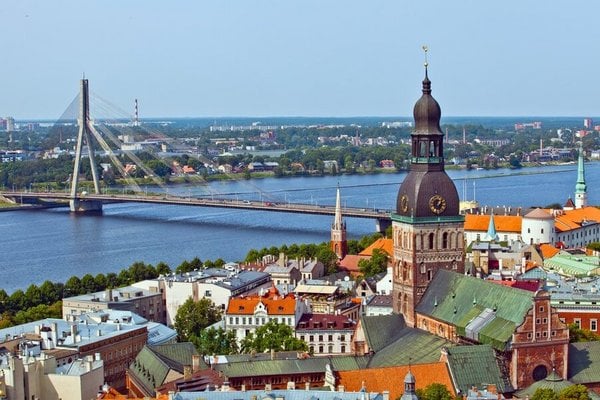
Riga’s Art Nouveau District – Admire Alberta iela’s ornate façades.
Copenhagen’s Nyhavn – Photograph colourful canal houses and visit Amalienborg Palace.
Baltic cruises showcase medieval old towns, imperial palaces and fascinating Northern European history.
Customs & Culture in Baltic
Old Town Traditions in the Baltics – In Tallinn and Riga, medieval guild halls, craft markets and cobbled streets create a strong sense of historic identity.
Sauna Culture in Northern Europe – In Finland and Estonia, sauna is practically sacred, often followed by a brisk dip in the sea.
Local Food Customs in Latvia – Expect rye bread, smoked fish and hearty soups; locals value simple, seasonal ingredients.
Respectful Behaviour in Churches – In Baltic capitals, quiet voices and modest dress are expected in Orthodox and Lutheran churches alike.
Seasonal Expectations & Weather
Late Spring (May to June) – 12–20°C in Copenhagen, Stockholm and Tallinn. White Nights begin in June. Midsummer festivals (late June) are major celebrations.
Summer (July to August) – 18–25°C, long daylight and relatively calm seas. Peak European holiday period.
Autumn (September) – 10–17°C, fewer crowds and occasional rain.
Cruising is rare outside May–September due to freezing winter conditions.
Alternative Regions to Consider
If you like the idea of capital-city cruising and cooler-climate scenery, these regions are natural next steps:
- Northern Europe – A wider mix of routes that can include Norway, Denmark, and northern German ports.
- Finland Cruises – Great if Helsinki is the highlight you want to build around.
- Europe Cruises – Useful for comparing Baltic itineraries with other European regions.
- Mediterranean – A very different feel, but similarly rich in culture and port variety.
Top Baltic Cruise Options & Alternatives
Southampton Departures
- Baltic Sea 2026 Cruises from Southampton – No-fly convenience with classic Baltic capitals and sea-day comfort.
- Baltic Sea 2027 Cruises from Southampton – Future sailings with strong cabin choice and popular school-holiday dates.
- Baltic Sea Cruises from Southampton – A handy overview of routes that begin in the UK.
By Cruise Line
- Baltic Sea Cruises with Princess Cruises – A polished onboard style paired with Baltic capital city days.
Ports & Nearby Add-Ons
- Germany – Useful if your itinerary includes Kiel, Warnemünde, or Hamburg.
- Hamburg, Germany – Great for Speicherstadt, Miniatur Wunderland, and views near the Elbphilharmonie.
- Sweden – Ideal for Stockholm-heavy itineraries and island-city sailing routes.
- Denmark – Perfect for Copenhagen, Aarhus, Skagen, and Bornholm planning.
FAQs About Baltic Cruises
What’s the best first-time itinerary for a Baltic sea cruise?
Look for sailings that include Copenhagen, Stockholm, and Helsinki. They’re easy to explore, packed with top sights (Tivoli Gardens, the Vasa Museum, Senate Square), and give you a brilliant “capital cities” introduction.
Are Baltic ports walkable?
Many are. Stockholm’s Gamla Stan and waterfront areas are straightforward, Helsinki’s harbour and Senate Square are close together, and Copenhagen’s Nyhavn to Amalienborg route is a simple walk. For ports like Kiel or Warnemünde, trains make it easy to reach Hamburg or Rostock.
Do Baltic cruises suit families?
Yes, especially in summer. Copenhagen’s Tivoli Gardens is a family highlight, Stockholm has Skansen open-air museum and the ABBA Museum, and many ships put on full kids’ club programmes on sea days.
When should I go for the best weather?
July and August are typically the warmest, while May, June, and September are excellent for comfortable sightseeing and slightly quieter attractions.
Which Baltic capitals are most common on cruises?
Stockholm, Helsinki, Tallinn, Riga and Copenhagen are the most frequently visited.
Do Baltic cruises include St Petersburg?
Not commonly now — most modern itineraries avoid Russia and focus on Scandinavia and the Baltics.
What’s the best month for a Baltic cruise?
June and July offer the best weather and long daylight hours, especially in Sweden and Finland.
Is Stockholm easy to explore independently?
Yes — the port is well connected, and Gamla Stan and the Vasa Museum are very accessible.
Are Baltic cruises good for families?
Yes — ports are safe, walkable, and packed with museums, boat trips and historic sights.
Intrigued by the culture and coastlines of the Baltic? Call our Cruise Specialists and let us help you find your perfect Baltic cruise.
Expert Tips for Cruising the Baltic
For Baltic cruises, we recommend itineraries with overnight stays in cities like Stockholm or Copenhagen, where evenings are calmer and more atmospheric. We also advise packing a light jacket year-round, as cool sea breezes are common even in summer.
 +44
+44