


British Isles Cruises
British Isles cruises explore England, Ireland, Scotland and Wales, featuring historic ports, scenic coastlines and rich cultural heritage.
Our Best British Isles Deals
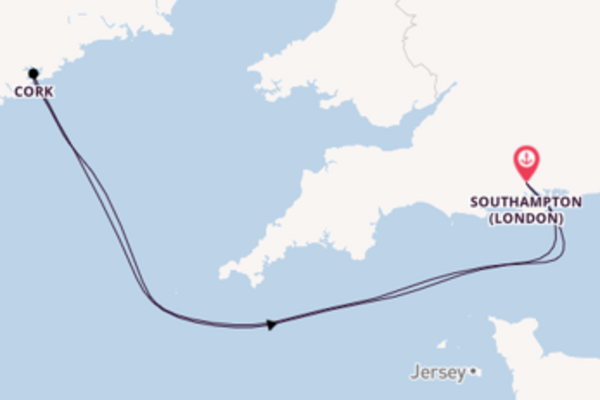
No Fly Short Break To Ireland
- MSC Virtuosa Offers A choice of 11 dining venues, 21 bars: 5 outdoor bars with breathtaking view and 16 indoor bars, each offering a unique experience
- Includes All Onboard Gratuities - Inclusive value: excellent service without added fees at disembarkation.
- The All Inclusive Premium Extra Drinks Package Can Be Added To Your Cruise From Only £28pp per Night - Please CALL To Book To Receive Fantastic Prices
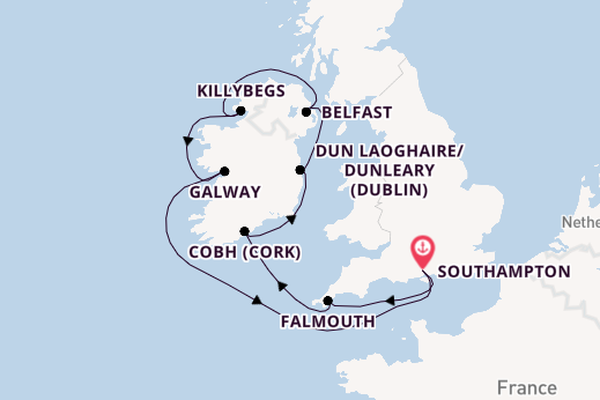
Luxury No Fly Circle Ireland
- Nearly 900 balcony staterooms on this modified Grand-class ship, with MedallionClass wristband technology delivering on-demand drinks anywhere on board
- Movies Under the Stars, Crown Grill steakhouse and Sabatini's Italian Trattoria are among the headline onboard experiences
- The Princess Theater hosts lavish Broadway-style productions; The Sanctuary adults-only retreat tops the ship for peaceful relaxation

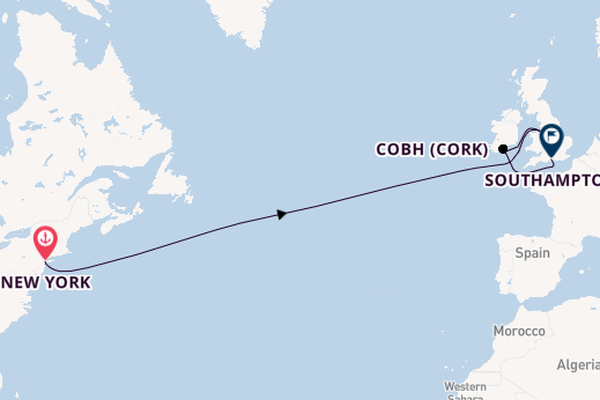
Luxury New York to Southampton Four Queens Celebration Transatlantic
- Includes 2 night NYC hotel stay
- Overnight onboard in Liverpool for the 4 Queens Celebration
- Deposit from £299pp

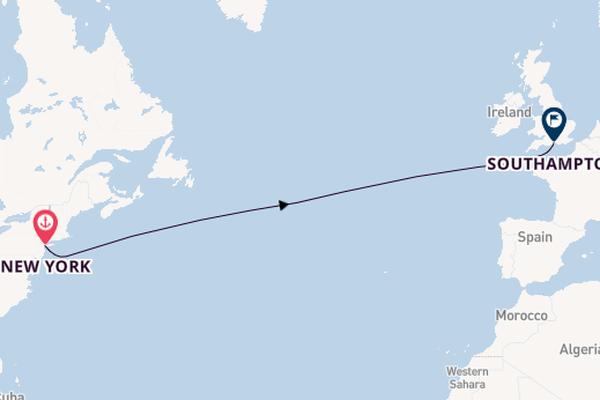
Transatlantic from New York with the Queen Mary 2
- The world's only ocean liner — purpose-built for the North Atlantic crossing, not a converted cruise ship
- The first planetarium at sea: 'Illuminations' hosts stargazing shows alongside cinema, concerts, and lectures
- Six speciality restaurants, Royal Court Theatre with West End-calibre productions, and nightly ballroom dancing in the Queens Room

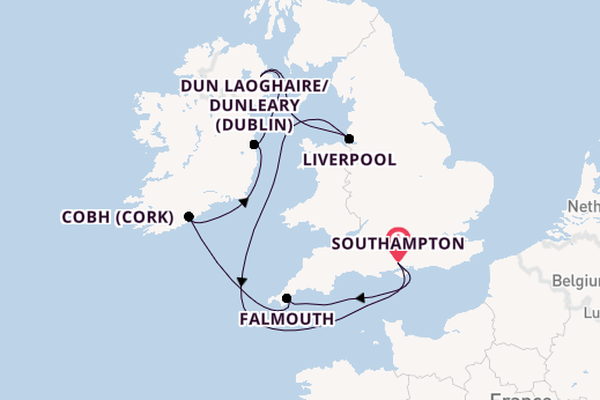
Luxury No Fly Ireland & England
- Refurbished 2025, sailing from Southampton — Majestic Princess has the SeaWalk glass-floor walkway cantilevered over the ocean
- Hollywood Pool Club's glass-domed pool, Crown Grill, Sabatini's, O'Malley's Irish Pub, and Chef's Table Lumiere across 16 venues
- MedallionClass delivers food and drinks anywhere on board; The Sanctuary offers an adults-only top-deck retreat
Luxury New Year in New York with Transatlantic to Southampton
- Spend New Year in New York
- Includes 4 Night New York Hotel Stay
- Luxury Cruising
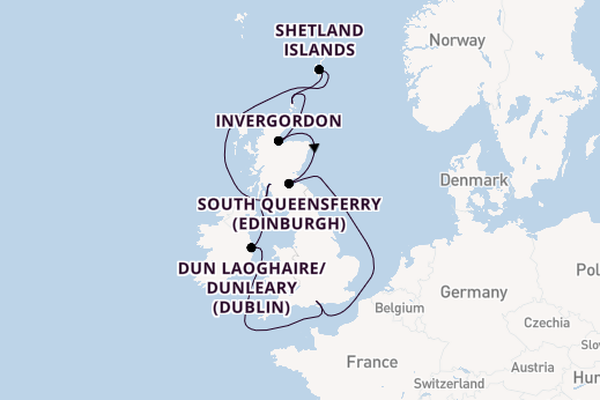
Luxury No Fly Irish Counties & Scottish Shores
- Refurbished 2025, sailing from Southampton — Majestic Princess has the SeaWalk glass-floor walkway cantilevered over the ocean
- Hollywood Pool Club's glass-domed pool, Crown Grill, Sabatini's, O'Malley's Irish Pub, and Chef's Table Lumiere across 16 venues
- MedallionClass delivers food and drinks anywhere on board; The Sanctuary offers an adults-only top-deck retreat
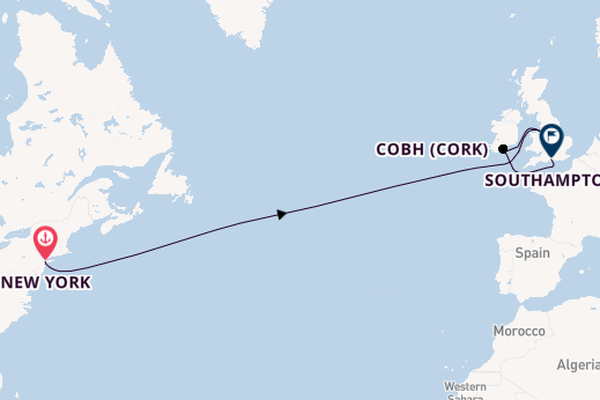
Transatlantic from New York with the Queen Mary 2
- The world's only ocean liner — purpose-built for the North Atlantic crossing, not a converted cruise ship
- The first planetarium at sea: 'Illuminations' hosts stargazing shows alongside cinema, concerts, and lectures
- Six speciality restaurants, Royal Court Theatre with West End-calibre productions, and nightly ballroom dancing in the Queens Room
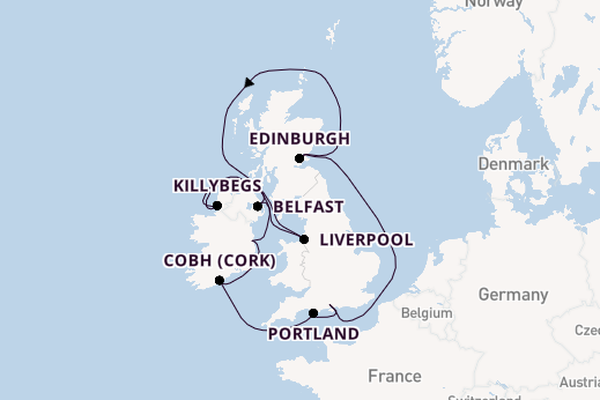
British Isles from Southampton, England with the Norwegian Star
- Garden Villas with private courtyards of up to 548 m², their own pool and sun deck — NCL's most distinctive luxury
- Mandara Spa with thermal suite and therapy pool, plus Spice H2O adults-only deck with six hot tubs and cocktail bar
- Freestyle Dining across steakhouse, French restaurant, sushi bar and Brazilian churrascaria — no fixed sittings, no dress code

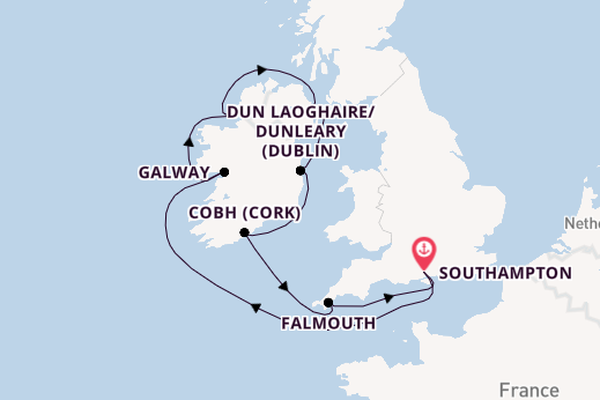
British Isles from Southampton, England with the Caribbean Princess
- Nearly 900 balcony staterooms on this modified Grand-class ship, with MedallionClass wristband technology delivering on-demand drinks anywhere on board
- Movies Under the Stars, Crown Grill steakhouse and Sabatini's Italian Trattoria are among the headline onboard experiences
- The Princess Theater hosts lavish Broadway-style productions; The Sanctuary adults-only retreat tops the ship for peaceful relaxation
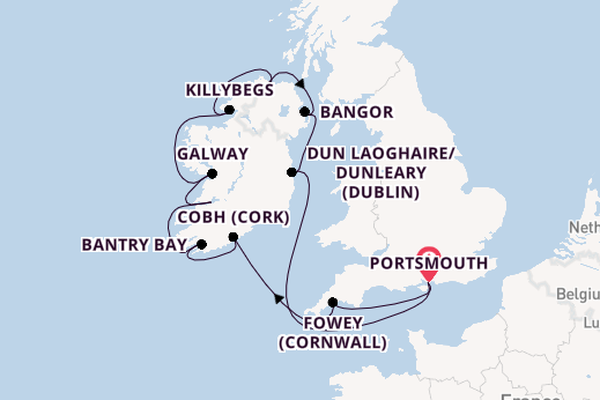
British Isles from Portsmouth, England, United Kingdom with the Azamara Quest
- Perfectly sized ships: big enough for great dining and entertainment, but small enough to feel personal and reach ports big ships can’t
- The AzAmazing Evenings totally live up to the name: experience top-notch entertainment in the most incredible settings
- It’s like slow travel, but on a cruise: late departures and overnight stays will give you plenty of time to explore

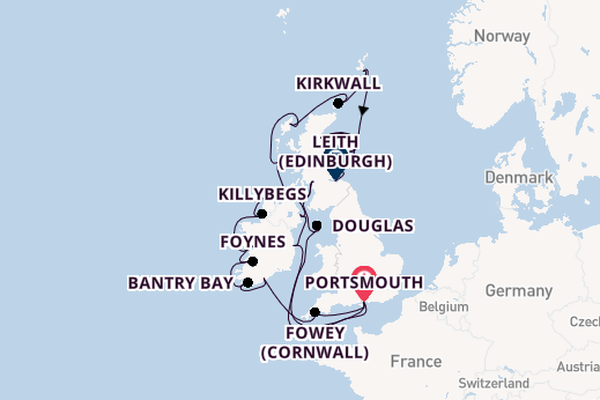
British Isles from Portsmouth, England, United Kingdom with the Azamara Quest
- Perfectly sized ships: big enough for great dining and entertainment, but small enough to feel personal and reach ports big ships can’t
- The AzAmazing Evenings totally live up to the name: experience top-notch entertainment in the most incredible settings
- It’s like slow travel, but on a cruise: late departures and overnight stays will give you plenty of time to explore
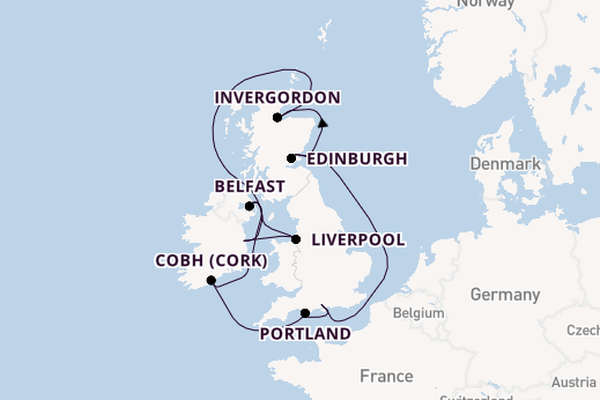
United Kingdom from Southampton, England with the Norwegian Star
- Garden Villas with private courtyards of up to 548 m², their own pool and sun deck — NCL's most distinctive luxury
- Mandara Spa with thermal suite and therapy pool, plus Spice H2O adults-only deck with six hot tubs and cocktail bar
- Freestyle Dining across steakhouse, French restaurant, sushi bar and Brazilian churrascaria — no fixed sittings, no dress code
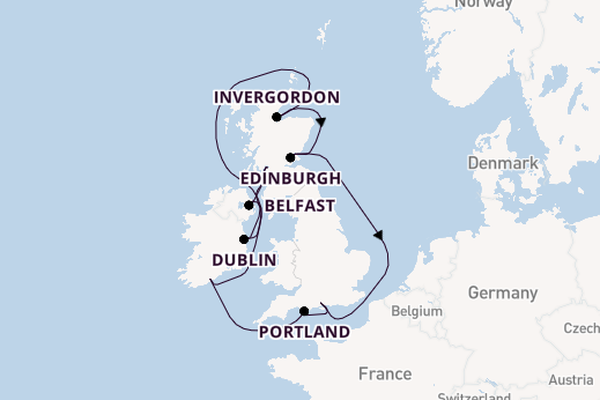
United Kingdom from Southampton, England with the Norwegian Star
- Garden Villas with private courtyards of up to 548 m², their own pool and sun deck — NCL's most distinctive luxury
- Mandara Spa with thermal suite and therapy pool, plus Spice H2O adults-only deck with six hot tubs and cocktail bar
- Freestyle Dining across steakhouse, French restaurant, sushi bar and Brazilian churrascaria — no fixed sittings, no dress code
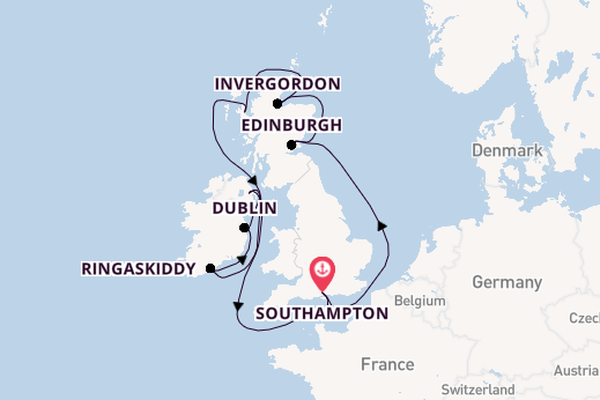
United Kingdom from Southampton, England with the Norwegian Star
- Garden Villas with private courtyards of up to 548 m², their own pool and sun deck — NCL's most distinctive luxury
- Mandara Spa with thermal suite and therapy pool, plus Spice H2O adults-only deck with six hot tubs and cocktail bar
- Freestyle Dining across steakhouse, French restaurant, sushi bar and Brazilian churrascaria — no fixed sittings, no dress code
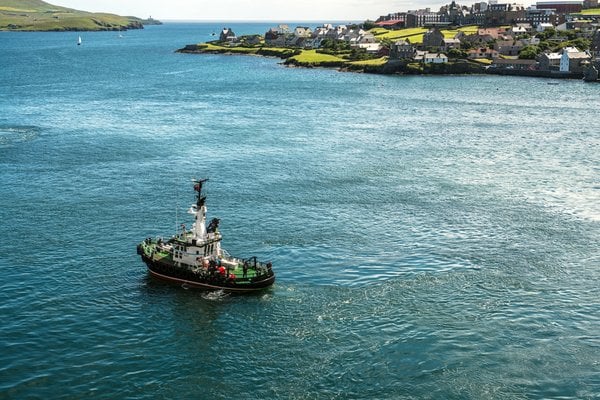
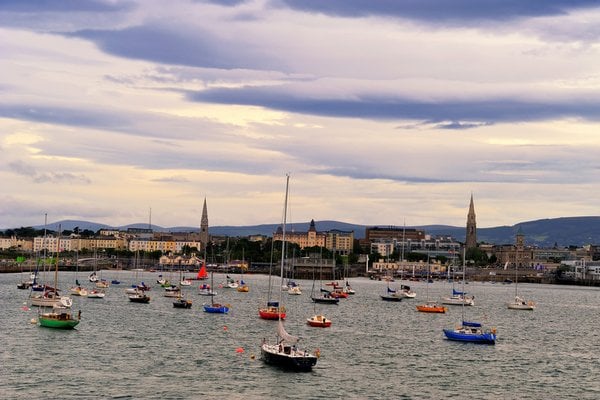
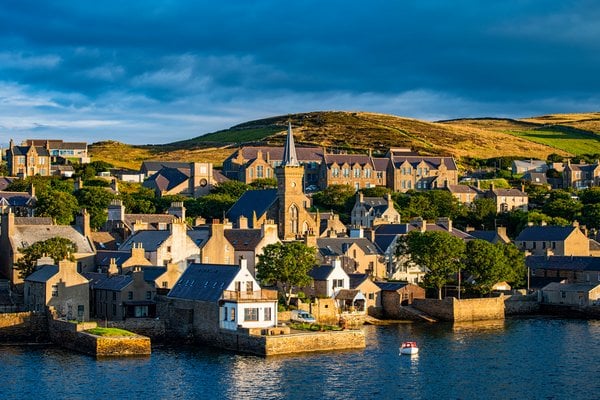
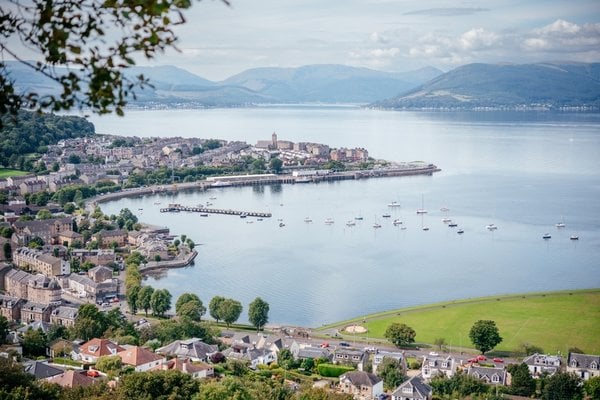
Harbours for British Isles


Travel Tips for British Isles
Explore The Historic British Isles
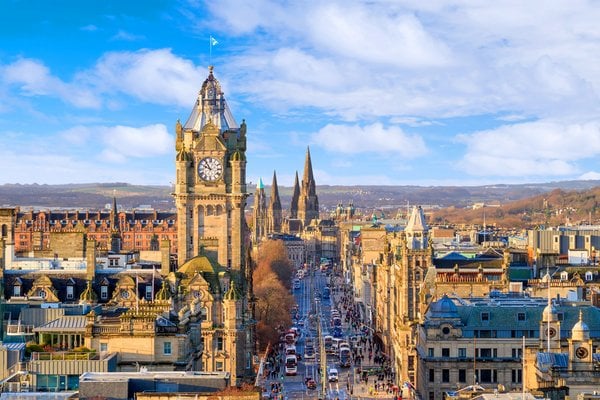
The joy of British Isles Cruises is that you can wake up in a different corner of the UK and Ireland each morning, without constantly repacking. One day you’re strolling Edinburgh’s Royal Mile beneath the ramparts of Edinburgh Castle; the next you’re breathing in sea air on the Antrim Coast near the Giant’s Causeway, or photographing colourful waterfront houses in Cobh before a quick spin to Blarney Castle. Cruise lines shaping these itineraries tend to fall into two camps: the classic, very-British experience (think formal nights, sparkling service and evening shows), and the smaller-ship style that’s brilliant for tucked-away ports like Ullapool or Portree.
Top Harbours in the British Isles
British Isles sailings can include an impressive mix of “big city” gateways and postcard-perfect coastal towns. Here are some of the most rewarding harbours and what to do when you step off the gangway:
- Southampton – Pair embarkation day with SeaCity Museum (Titanic story), a walk around the medieval Bargate, or a quick escape to the New Forest for wild ponies and forest pubs.
- Liverpool – Albert Dock for Tate Liverpool and The Beatles Story, then Mathew Street for the Cavern Club atmosphere.
- Belfast – Titanic Belfast is essential; add St George’s Market for local bites and a Cathedral Quarter stroll for street art and live music.
- Cobh (Cork) – The Titanic Experience (Cobh) is a moving visit; the photogenic St Colman’s Cathedral towers above the harbour. Many excursions head to Blarney Castle & Gardens.
- Dublin (often via Dún Laoghaire) – Trinity College’s Book of Kells, the Ha’penny Bridge, and a wander through Temple Bar; whisky fans love the Irish Whiskey Museum or a distillery tour.
- Greenock (Glasgow) – Hop to Glasgow for Kelvingrove Art Gallery & Museum and the Riverside Museum, or head west to Loch Lomond for classic Scottish scenery.
- Invergordon – A brilliant gateway to Loch Ness, Urquhart Castle, and the Black Isle; whisky distillery excursions are a favourite from here too.
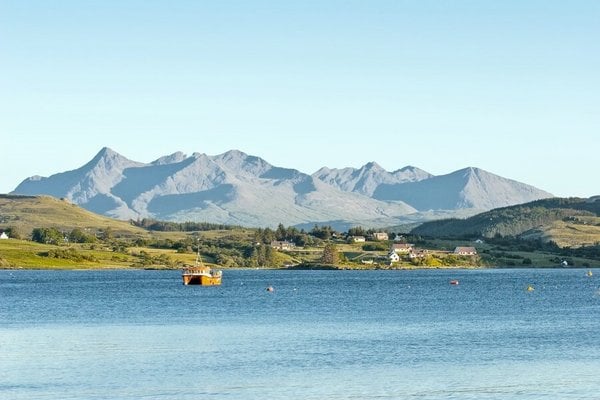
- Portree (Isle of Skye) – Lookouts over the Old Man of Storr, the drama of the Quiraing, and the fairy-tale pools at the Fairy Pools (time permitting) make this a day you’ll talk about for ages.
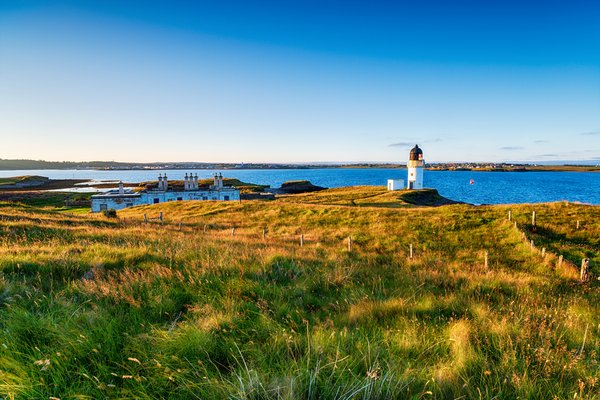
- Lerwick (Shetland) – Explore Jarlshof (prehistoric-to-Norse settlement), the Shetland Museum & Archives, and the coastal views around Sumburgh Head lighthouse.
- Stornoway (Lewis & Harris) – Lews Castle grounds are lovely; for a “wow” moment, shore trips to the Callanish Standing Stones are unforgettable.
Top Attractions and Activities in the British Isles
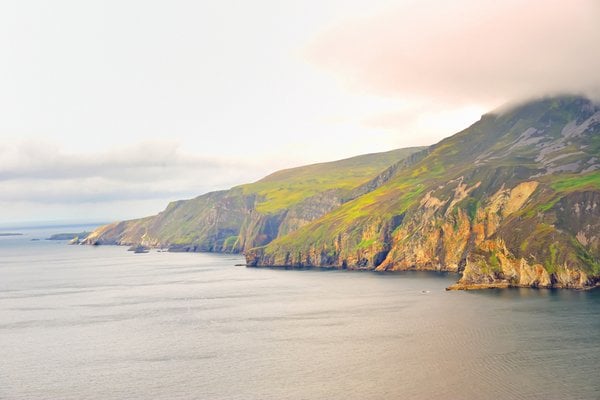
Cliffs of Moher, Ireland – Walk the Atlantic cliff paths rising 214 metres above the sea.
Edinburgh Castle, Scotland – Tour the Crown Jewels and Great Hall overlooking Princes Street Gardens.
Stonehenge, England – Visit the prehistoric stone circle on Salisbury Plain.
Cardiff Castle, Wales – Explore the Norman keep and lavish Victorian interiors.
Giant’s Causeway, Northern Ireland – Step across the hexagonal basalt columns along the Antrim Coast.
St Michael’s Mount, Cornwall – Cross the tidal causeway to the medieval castle and gardens.
Cruising the British Isles delivers a rich tapestry of Celtic heritage, dramatic coastlines and legendary historic landmarks across four nations.
Customs & Culture in British Isles
Regional Identity Across the British Isles – A cruise calling at Liverpool, Belfast and Edinburgh will reveal distinct accents, humour and local pride in each nation.
Historic Etiquette at Heritage Sites – Castles, cathedrals and war memorials are treated respectfully, with quiet voices expected indoors.
Tea and Café Culture – Afternoon tea is popular in England, while cosy cafés and traybakes dominate in Scotland and Northern Ireland.
Local Markets and Crafts – Look for Cornish pasties, Irish linen and Scottish Harris Tweed depending on your port.
Seasonal Expectations & Weather
Spring (April to May) – 8–16°C with frequent “four seasons in one day” conditions. Expect a mix of sunshine, sea mist and sharp coastal showers, particularly around the Hebrides, Orkney and the Irish Sea. Easter and May Bank Holidays increase domestic travel and can make ports like Liverpool and Belfast busier.
Summer (June to August) – The calmest sea period overall, with temperatures ranging from 17–26°C in southern England and 14–21°C in Scotland and Ireland. Long daylight is a major perk for scenic sailings around Skye, Mull and the Isles of Scilly. Peak demand coincides with UK school holidays, and Edinburgh becomes exceptionally busy in August.
Autumn (September to October) – 10–19°C with fewer crowds, but higher chances of wind and rain. Sea crossings between Ireland and western Scotland can become choppy.
Winter (November to March) – 2–9°C, short daylight, and the highest storm risk. Winter sailings may see itinerary changes due to Atlantic weather.
Seasonal Events – St Patrick’s Day, Edinburgh Festival Fringe, and Hogmanay are the biggest crowd drivers across the region.
Alternative Regions to Consider
Ireland – If you enjoy British Isles cruising for varied ports, Ireland-focused itineraries deepen the experience with Galway’s Latin Quarter, Cobh’s harbour history and the Giant’s Causeway from Belfast.
Norwegian Fjords – For a scenery upgrade, fjord cruising amplifies the cliffs and waterfalls you may glimpse around Scotland.
Baltic Sea – If you like multi-country itineraries, the Baltics combine Stockholm, Helsinki and Tallinn in one cohesive route.
Iceland – For wilder landscapes and geothermal drama, Iceland is a striking northern alternative.
Top British Isles Cruises & No Fly Options
British Isles collections & styles
- British Isles Cruises 2026 – Early planners’ pick for the widest choice.
- British Isles Cruises 2027 – Great for peak-season cabins and dates.
- British Isles Cruises from Liverpool – Easy embarkation with a city break vibe.
- British Isles Cruises from Southampton – Classic UK departure with huge choice.
- British Isles Cruises from the UK – Sail without flights and keep it simple.
- British Isles Fly Cruises – Ideal if you want a wider range of embark ports.
- Cheap Cruises Around British Isles – Smart-value itineraries for every budget.
- Luxury British Isles Cruises – Elevated service, dining, and shore experiences.
- Northern Europe – Pair the Isles with Nordic-style city calls.
- Princess British Isles Cruises – Popular for comfort, dining, and itineraries.
Short breaks & mini sailings from Southampton
- 2 Night Cruise From Southampton – A quick getaway to reset fast.
- 2 Night Guernsey Cruises from Southampton – Island scenery in a compact break.
- 3 Day Mini Cruise From Southampton – Perfect for first-time cruisers.
- 3 Night Guernsey Cruises from Southampton – Extra time ashore with island charm.
- 5 Day Cruises from Southampton – A fuller itinerary without using up leave.
- 7 Day Cruises From Southampton – The classic “week away” sweet spot.
- 14 Day Cruises From Southampton – More ports, more variety, more wow.
- Short Cruises From Southampton – Handy options for flexible dates.
- Cheap Mini Cruises from Southampton – Great value for a short sea break.
By year & featured sailings from Southampton
- 2026 Cruises from Southampton – Plan ahead with the best selection.
- 2027 Cruises from Southampton – Secure school-holiday and summer weeks.
- Cruises 2028 from Southampton – Future dates for early-bird deals.
- 2026 Cruises from Southampton Aboard P&O Arvia – Big-ship energy with modern style.
- 2027 Cruises from Southampton Aboard P&O Arvia – Popular dates fill quickly.
- 2026 Virgin Voyages Cruises from Southampton – Adults-focused sailings with flair.
- 2027 Virgin Voyages Cruises from Southampton – Great for grown-up getaways.
- Cruises from Southampton – Browse every itinerary from the port.
All-inclusive, adults-only & seasonal sailing themes
- Adult Only Cruises from Southampton – Quieter sailings with grown-up vibes.
- All Inclusive Southampton Cruises – Simplify budgeting from the start.
- All Inclusive No Fly Southampton 2026 Cruises – Great-value no-flight packages.
- All Inclusive No Fly Southampton 2027 Cruises – Lock in next year’s best choices.
- All Inclusive Southampton 2026 Christmas Cruises – Festive sailings made easy.
- All Inclusive Southampton 2027 Christmas Cruises – Christmas at sea, planned ahead.
- Christmas Cruises From Southampton – Seasonal sparkle with sea views.
- Christmas Mini Cruises from Southampton – A short festive break onboard.
- Easter Cruises from Southampton – Springtime sailings for a reset.
- August Cruises from Southampton – Peak summer escapes.
- January Cruises from Southampton – Start the year with a getaway.
- February Cruises from Southampton – Winter breaks with fewer crowds.
- May Cruises from Southampton – Longer days, fresh itineraries.
- September Cruises from Southampton – A calmer, golden-season favourite.
- October Cruises from Southampton – Crisp air and cosy evenings.
- November Cruises from Southampton – Value-focused sailings.
Destination-led routes from Southampton
- 7 Night Mediterranean Cruises from Southampton – Sun-seeking itineraries with ease.
- Mediterranean Cruise from Southampton – Browse classic Med routes.
- Mediterranean Cruises 2026 from Southampton – Plan next year’s sunshine.
- Mediterranean Cruises 2027 from Southampton – Secure prime dates early.
- Western Mediterranean Cruises from Southampton – Iconic ports and coastal days.
- Adriatic Cruises from Southampton – Old towns and sparkling seas.
- Croatia 2026 Cruises from Southampton – Adriatic highlights made simple.
- Croatia 2027 Cruises from Southampton – Next year’s best routes.
- Croatia Cruises from Southampton – Compare itineraries in one place.
- Cruises to Greece from Southampton – Island time with a UK start.
- Greek Islands 2026 Cruises from Southampton – Early booking sweet spot.
- Greek Islands 2027 Cruises from Southampton – Plan ahead for peak dates.
- Greek Islands from Southampton – Browse island itineraries.
- Italy 2026 Cruises from Southampton – Culture, coastlines, and cuisine.
- Italy 2027 Cruises from Southampton – Popular sailings for planners.
- Italy Cruises from Southampton – Compare Italian itineraries.
- Baltic Sea Cruises from Southampton – City-rich northern routes.
- Baltic Sea 2026 Cruises from Southampton – Next year’s Baltic options.
- Baltic Sea 2027 Cruises from Southampton – Early access to key sailings.
- Iceland Cruises from Southampton – Waterfalls, lava fields, hot springs.
- Norway Cruises from Southampton – Fjords and coastal cities.
- Norway Cruises 2026 from Southampton – Plan next year’s fjord escape.
- Norway 2027 Cruises from Southampton – Early booking for top routes.
- Northern Lights Cruises from Southampton – Chase aurora season from the UK.
- World Cruises from Southampton – Big adventures with UK embarkation.
- World Cruises 2026 from Southampton – Plan a bucket-list year.
- World Cruises 2027 from Southampton – Secure the best cabins early.
Ship, line & brand pages from Southampton
- P&O Cruises from Southampton – Traditional UK cruising made easy.
- P&O Cruises 2026 from Southampton – Next year’s P&O dates.
- P&O Cruises 2027 from Southampton – Early-bird options for planners.
- P&O Cruises August 2026 from Southampton – Peak summer sailings.
- P&O Arvia Cruises from Southampton – Browse Arvia itineraries.
- P&O Aurora 2026 Cruises from Southampton – Adults-style sailings and classics.
- P&O Aurora 2027 Cruises from Southampton – Plan ahead for Aurora dates.
- Cunard Line Cruises from Southampton – Iconic ocean-liner style.
- Princess Cruises from Southampton – Comfortable ships and varied routes.
- Princess Cruises 2026 from Southampton – Next year’s Princess sailings.
- Princess Cruises 2027 from Southampton – Early access to key dates.
- Princess Cruises 2028 from Southampton – Future planning made simple.
- Princess Mini Cruises from Southampton – Shorter Princess sailings.
- Princess Canary Islands Cruises from Southampton – Winter sun options.
- MSC Cruises from Southampton – International style from the UK.
- MSC Cruises from Southampton 2026 – Next year’s MSC departures.
- MSC Cruises from Southampton 2027 – Plan ahead for MSC dates.
- MSC Virtuosa Cruises from Southampton – Browse Virtuosa itineraries.
- MSC Virtuosa 2026 Cruises from Southampton – Next year’s Virtuosa sailings.
- MSC Virtuosa 2027 Cruises from Southampton – Early booking for top dates.
- Celebrity Cruises from Southampton – Contemporary premium cruising.
- Celebrity 2026 Cruises from Southampton – Next year’s Celebrity options.
- Celebrity 2027 Cruises from Southampton – Plan ahead for favourite routes.
- NCL Cruises from Southampton – Freestyle vibes from the UK.
- Fred Olsen Cruises from Southampton – Smaller-ship charm and itineraries.
- Queen Anne 2026 Cruises from Southampton – Cunard’s newest-name sailings.
- Queen Anne 2027 Cruises from Southampton – Future dates for planners.
- Queen Elizabeth Cruises from Southampton – Classic Cunard elegance.
- Queen Mary 2 New York Cruises from Southampton – Add an iconic crossing feel.
- Sky Princess Cruises from Southampton – Popular ship, great itineraries.
- Sky Princess 2026 Cruises from Southampton – Next year’s Sky Princess dates.
- Sky Princess 2027 Cruises from Southampton – Early booking for prime weeks.
UK, Ireland & Scotland port guides
- Belfast, Northern Ireland, United Kingdom – Titanic history and city culture.
- Cobh (Cork), Ireland – Colourful harbour and heritage sites.
- Cork, Ireland – A lively city close to Blarney.
- Cruises to Ireland from the UK – Explore Ireland with easy departures.
- Dublin, Ireland – Literature, music, and pub culture.
- Dun Laoghaire/ Dunleary (Dublin), Ireland – Coastal gateway into Dublin.
- Dunmore East, Ireland – A pretty fishing village call.
- Galway, Ireland – Trad music and Atlantic energy.
- Ireland – Browse ports and itineraries.
- Ireland Cruises from Southampton – Great UK departure option.
- Killybegs, Donegal, Ireland – Wild coastlines and Donegal charm.
- Northern Ireland – Ports, sights, and route ideas.
- Ringaskiddy, Cork, Ireland – Useful gateway for Cork excursions.
- Waterford, Ireland – Viking heritage and craft traditions.
- Aberdeen, Scotland – Granite city and coastal walks.
- All Inclusive Fly Scotland Cruises – Packages with flights included.
- Dundee, Scotland – Riverside city with museums nearby.
- Edinburgh, Scotland, United Kingdom – Castle views and historic streets.
- Fly Scotland Cruises – Start your trip with a flight.
- Glasgow, Scotland – Culture, shopping, and music.
- Greenock (Glasgow), Scotland – Gateway to Glasgow and Loch Lomond.
- Invergordon, Scotland – Highlands, lochs, and distilleries.
- Leith (Edinburgh), Scotland – Shore access for Edinburgh days.
- Lerwick, Shetland Islands, Scotland – Norse heritage and rugged coasts.
- Oban, Scotland – Seafood, scenery, and island links.
- Portree, Isle of Skye, Scotland – Skye landscapes and harbour views.
- Rosyth (Edinburgh), Scotland – Fife gateway to Edinburgh sights.
- Scotland – Browse Scottish ports and routes.
- Scotland Mini Cruises – Short breaks with Scottish calls.
- South Queensferry (Edinburgh), Scotland, United Kingdom – Perfect for Forth Bridge photos.
- Stornoway (Hebrides), Scotland – Island culture and coastal walks.
- Ullapool, Scotland – Highlands scenery in a small harbour.
From the UK: wider cruise options
- 2 Night Cruises from the UK – Fast breaks with easy travel.
- 5 Night Cruises from the UK – A longer short-break option.
- Adriatic Cruises from the UK – Coast-hopping with UK departures.
- Adult Only Cruises from the UK – Grown-up sailings, no flights required.
- All Inclusive Cruises 2026 from the UK – Next year’s bundled options.
- All Inclusive Cruises 2027 from the UK – Plan ahead for package value.
- All Inclusive Cruises from the UK – Simplify spending from day one.
- America Cruises from the UK – Big journeys from home ports.
- Antarctica Cruises from the UK – Bucket-list polar exploration.
- Around the UK Cruises – Coastal calls with a local focus.
- Asia Cruises from the UK – Long-haul itineraries from home.
- Australia 2026 Cruises from the UK – Plan a grand voyage.
- Australia 2027 Cruises from the UK – Future dates for big trips.
- Australia Cruises from the UK – Browse routes and ideas.
- Barbados Cruises from the UK – Sun and sea with UK departure options.
- Brazil Cruises from the UK – Culture-rich South America itineraries.
- Canada Cruises from the UK – Scenic routes and city stays.
- Canary Islands Cruises from the UK – Winter warmth without flights.
- Caribbean Cruises from the UK – Longer sailings to island sunshine.
- Carnival Cruises from the UK – Fun-focused cruising options.
- Celebrity Cruises from the UK – Premium voyages from home ports.
- Cheap Cruises from the UK – Budget-friendly routes and dates.
- Christmas Cruises from the UK – Festive sailings close to home.
- Croatia Cruises from the UK – Adriatic highlights with UK departures.
- Cruises from the UK to Spain – City breaks and sunny ports.
- Cruises to Greece from the UK – Island routes from UK ports.
- Cruises to New Zealand from the UK – A true once-in-a-lifetime itinerary.
- Cuba Cruises from the UK – Caribbean culture with UK departure.
- December Cruises from the UK – Winter sailings and festive options.
- Fly Cruises from the UK – Flight-plus-cruise packages.
- Iceland Cruises from the UK – Geysers, waterfalls and hot springs.
- Icon of the Seas Cruises from the UK – Big-ship cruising from home.
- Italy Cruises from the UK – Culture-rich routes with UK starts.
- Japan Cruises from the UK – Long-haul itineraries and highlights.
- Last Minute Cruises from the UK – Late deals and quick departures.
- Mediterranean Cruise 2026 from UK – Plan next year’s Med escape.
- Mediterranean Cruise from UK – Browse classic Mediterranean routes.
- Mediterranean Cruises 2027 from the UK – Future dates and options.
- Mini Cruises 2026 from the UK – Short breaks for next year.
- Mini Cruises 2027 from the UK – Plan ahead for mini breaks.
- Mini Cruises from the UK – Browse quick getaway options.
- MSC Cruises from the UK – International-style sailings from home.
- NCL Cruises from the UK – Freestyle cruising with UK departures.
- New Year Cruises from the UK – Celebrate at sea from home ports.
- New York Cruises from the UK – Add a big-city finale.
- New York Fly Cruises from the UK – Flight plus cruise combinations.
- Northern Lights Cruises from the UK – Aurora-season itineraries from home.
- Norway Cruises from the UK – Fjords and coastal towns.
- Norwegian Fjords Cruises from the UK – Scenic cruising at its best.
- P&O Cruises from the UK – Classic UK cruising from home.
- Princess Cruises from the UK – Comfortable sailings from home ports.
- Reposition Cruises from the UK – One-way routes with big value.
- Royal Caribbean Cruises from the UK – Big ships with UK departures.
- Scandinavia Cruises from the UK – Nordic capitals and coastal beauty.
- Scarlet Lady Cruises from the UK – Adult-focused sailings with style.
- Short Cruises from the UK – Quick itineraries for flexible plans.
- South Africa Cruises from the UK – Longer adventures from home.
- Southeast Asia, From UK – Big journeys, unforgettable ports.
- Transatlantic Cruises from the UK – Classic ocean-crossing itineraries.
- Venice Cruises from the UK – Adriatic gateways and iconic views.
- Vietnam Cruises from the UK – Culture-rich Asia itineraries.
- Virgin Voyages Cruises from the UK – Adults-only energy and clever dining.
- World Cruises from the UK – Big, bucket-list routes.
- No Fly Cruises – Set sail without airports.
FAQs About British Isles Cruises
What’s the best first British Isles itinerary?
A balanced first trip usually mixes one major city gateway (Edinburgh, Dublin or Belfast) with at least one island or Highlands-style port such as Portree, Stornoway, Lerwick or Invergordon. That gives you castles, coastline and culture in one sailing.
Will I need lots of cash onshore?
Not usually. Most places take card, but a small amount of cash is handy for markets, smaller cafés, and tips on independent tours.
How do I avoid feeling rushed in port?
Pick itineraries with longer stays, and decide on one “must-do” attraction plus one “wander” area. For example: Titanic Belfast plus Cathedral Quarter; or Edinburgh Castle plus a Royal Mile wander with time for a proper lunch.
Are British Isles cruises good value compared to land travel?
They can be excellent value because your transport, accommodation, and many meals are wrapped into one price. If you want the easiest planning route, look for stay and cruise deals that combine hotel nights and travel with your sailing.
What destinations are included in a British Isles cruise?
Typically England, Scotland, Wales, Northern Ireland, and Ireland — plus sometimes the Channel Islands and Isle of Man.
Do British Isles cruises include Ireland?
Most do — common stops include Dublin, Belfast, Cork (Cobh) and Waterford.
What’s the best month for a British Isles cruise?
June and July offer the best weather odds and longest daylight hours.
Are British Isles cruises scenic?
Yes — highlights include the Scottish Highlands coastline, Orkney, and Cornwall’s rugged shores.
Do British Isles cruises include overnight stays?
Not usually, but some itineraries include longer calls in Dublin or Belfast.
Eager to explore the charm of the British Isles? Call our Cruise Specialists and let us help you find your perfect British Isles cruise.
Expert Tips for Cruising the British Isles
On British Isles cruises, we recommend prioritising ports like Stornoway and Kirkwall, where ships dock close to town and independent exploration is easy. We also suggest planning excursions around tide times, as smaller ports can experience adjusted schedules that affect tender operations.
 +44
+44